
- March 9, 2026
- Posted by: Rishabh Agrawal
- Categories: Import Factoring, Blog
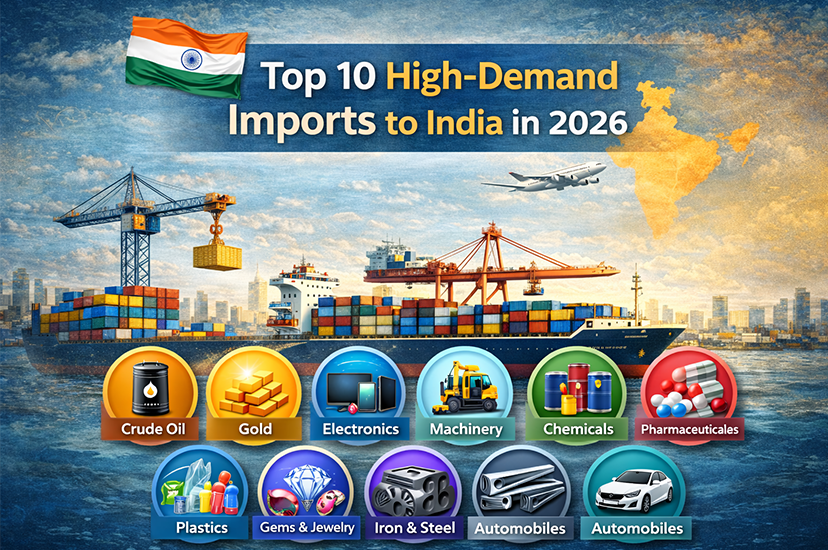
The 2026 trade environment in India is characterized by industrial expansion, infrastructure growth, increased consumer demands and energy dependency. Although the manufacturing of domestic products is improving, some of the industries continue to be dependent on international sourcing. Knowledge of the high-demand imports for India is necessary when businesses are planning their procurement, compliance, and working capital.
From energy resources to advanced electronics, the import trends help identify areas where India has suppliers and the industries that will support the import trade statistics in the country in 2026.
What Are High-Demand Imports?
High-demand imports are goods that we source from other countries because of the limited production in our country for high consumption needs. These commodities affect the trade deficit in India, the outflow of foreign exchange, customs revenue, and the stability of the entire supply chain.
Leading Import Categories Driving India’s Trade in 2026
Below is the list of the 10 high-demand imports to India in 2026 according to the value of trade, industry dependence, and strategic needs.
- Crude Oil and Petroleum Products
In 2026, crude oil will remain the top import commodity for India. Domestic oil production meets only a fraction of national demand. The rest is imported from the global markets. Transportation, power generation, and industrial manufacturing depend on imports of petroleum. Any change in the global prices of crude oil has a direct effect on the level of the import bill and inflation in India.
- Gold
Gold is also one of the largest high-value imports to India. Jewelry production, diversification of investing, and seasonal purchasing are the forces that drive the demand.
Changes in customs duty and international price fluctuations affect the importation. India is highly reliant on gold imports to meet internal needs despite domestic recycling.
- Electronic Components and Semiconductors
The growing electronic manufacturing industry in India relies heavily on imported semiconductors and integrated circuits. Demand is set off by Smartphones, electric vehicles, data centers and consumer electronics.
The electronics supply chain of the country focuses on Semiconductor imports. Until the domain of chip fabrication becomes large-scale in the country, they will still depend on international manufacturers.
- Machinery and Capital Goods
Infrastructure development and industrialization increase demand for imported machinery. Some of these include high-accuracy machinery, turbines, robotics and manufacturing equipment.
These imports reinforce the production capacity and boost industrial efficiency. In 2026, capital goods imports will continue to be part of the strategy of manufacturing expansion in India.
- Coal and Coking Coal
The imports of coal are used to supplement the local mining production, particularly in the production of power and steel. High-grade coking coal for the blast furnace is largely imported.
The concerns of energy security ensure that coal remains among the most important energy imports in India, especially to be used in industries.
- Chemicals and Petrochemical Intermediates
India is the importing country of speciality chemicals, organic compounds, and petrochemical feedstock in the pharmaceutical, textile, and agro industries.
This category promotes the competitiveness of downstream manufacturing and export. India continues to be dependent on chemical imports in its industrial raw material supply chain.
- Fertilizers
Agriculture is still dependent on the imported potash, phosphates, and nitrogen-based fertilizers. Domestic production does not fully meet crop demand.
The role of fertilizer imports in food security and the government subsidy system in the agricultural import industry.
- Edible Oils
India is a major importer of edible oils in the world. Gaps in domestic consumption are met by imports of palm oil, soybean oil and sunflower oil.
The imports of edible oils have a substantial impact on food inflation and adjustment of the trade policy in the larger agro commodity imports population.
- Precious and Semi-Precious Stones
Rough diamonds and gemstones are imported into India for processing and re-export. The jewelry and gems industry depends on foreign raw materials to maintain its competitiveness throughout the world.
This component indicates a close interconnection of imports and exports in the value-added trade model.
- Defence and Aerospace Equipment
India continues to import advanced defence systems, plane parts, and aerospace-specific equipment. These imports enhance national security potentials.
Although home-based production efforts are on the rise, high technology imports are still important elements in the strategic defence procurement framework.
Key Drivers Behind India’s Import Demand in 2026
Several structural factors contribute to India’s import trends 2026:
- Rising energy consumption
- Increasing manufacturing base
- Infrastructure investment
- Technology adoption
- Stability of agricultural demand
- Consumer goods expansion
These drivers make sure that there is continued demand for the critical raw materials and industrial inputs.
Impact of High Demand Imports on Trade and Economy
High-value imports often require advance payments, outlay of customs duty, and logistics expenses before revenue is realized. Clearance or supplier payment delays can put a strain on liquidity.
The companies dealing with key types of imports are forced to operate in a world where the working capital cycle is longer, and the exchange rates and prices are not constant.
What India’s Import Trends Signal for 2026
India’s top import categories reflect structural dependencies in energy, technology, agriculture, and manufacturing industrial products. During the period of the development of the domestic production initiatives, global sourcing is critical to help grow the economy.
Those businesses where import trade analysis is tracked, compliance is closely handled, and strong financial planning will continue to be competitive. The 2026 operational resilience and financial stability will be characterized by strategic import management.
Credlix Strengthening Liquidity for Import-Led Growth
The process of regulation compliance is not enough to address high-demand imports. It needs good liquidity management. Credlix supports import businesses by offering e-based trade finance services that enhance the efficiency of working capital and improve cash flow transparency. Credlix prevents companies sustain growth even in import-intensive industries by removing financial pressure through optimal receivable cycles.
FAQs
- What are the top high-demand imports to India in 2026?
The most demanded imports in terms of trade volume and value are crude oil, gold, semiconductors, machinery, coal, chemicals, fertilizers, edible oils, precious stones and defence equipment.
- Why does India rely heavily on imports?
India imports goods where domestic production is inadequate or lacks the technology to produce, i.e. in energy, high technologies and also in some raw materials necessary to produce.
- How do high-demand imports affect businesses?
High-value imports affect the working capital demand, compliance with customs, currency exposure, and supply chain planning, making the financial and operational management of import-dependent companies of critical importance.
