
- March 16, 2026
- Posted by: Rishabh Agrawal
- Categories: HSN code, Blog
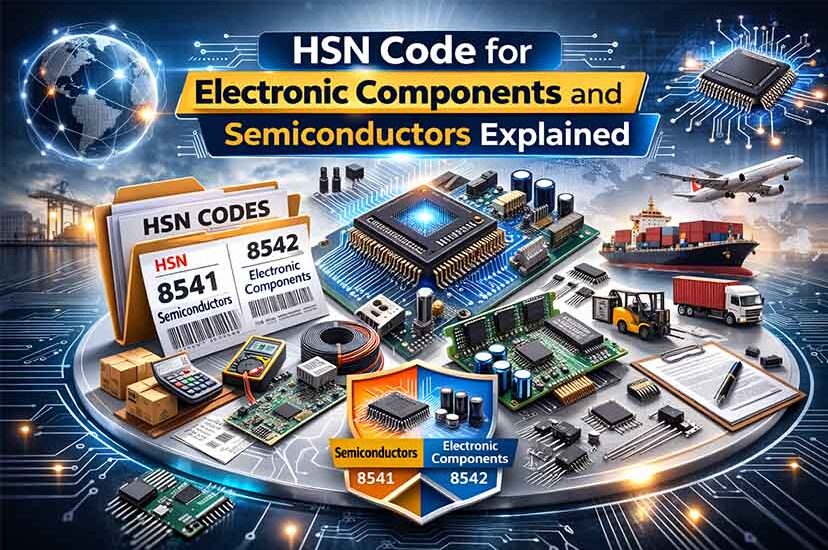
Almost all modern electronic devices, from smartphones and laptops to industrial machinery and electric cars, are powered by electronic parts and semiconductors. With the increasing global electronics trade, the correct classification of the product has become a necessity for businesses that deal in the production, importation, or exportation of such products. The GST system in India requires companies to apply HSN codes to identify goods accurately for taxation and compliance.
For the electronics business, knowledge of the appropriate HSN code for products like electronic components and semiconductor devices assists in having the right GST determination, proper invoicing, and easy customs clearance. Misclassification may result in wrong tax returns, delays in shipment, or penalties from the regulating bodies. Given that the scope of electronic parts includes a diverse range of products, which may include capacitors, resistors, integrated circuits, and microprocessors, the businesses should be aware of how the products are categorized with the GST tariff system.
Better knowledge of the HSN of electronics also enables the exporters to have a clear record and comply with the international trade conditions.
What is an HSN Code?
A Harmonized System of Nomenclature is an international standardized system to describe goods for taxation and trade purposes. HSN codes are used to identify the products according to their category to ensure correct GST rates and easier processing of goods like electronic components and semiconductor devices.
Understanding HSN Classification for Electronics
The electrical and electronic products are mostly included in Chapter 85 of the HSN classification system, covering electrical machinery, equipment, and their parts. There is a broad range of products in this chapter that are employed in electrical circuits, communication systems, and industrial electronics.
Products that are classified under Chapter 85 include circuit boards, capacitors, semiconductor devices, and integrated circuits. Electronic equipment usually has many small components; therefore, every piece has to be categorized according to its purpose and nature.
Proper classification of HSN of electronics makes sure that the proper GST rate is charged to the business and appropriate compliance practices are taken. It also assists customs in easily detecting goods in any international trade engagement.
Structure of HSN Codes Under GST
The HSN code system has a numerical arrangement that classifies goods on an increasing level of detail. The number of groups signifies the level of classification.
| Level | Digits | Meaning |
| Chapter | 2 digits | Broad Product Category |
| Heading | 4 digits | Product Group |
| Subheading | 6 digits | Specific Product Type |
| National Code | 8 digits | Detailed classification used in India |
For example, the products that fall in Chapter 85 are in the electrical machinery and electronics industry. The added numbers also define the specific type of electronic product.
This HSN system under GST is used to ensure consistency throughout world trade systems, and at the same time, countries are free to impose their own taxation regulations.
HSN Codes for Electronic Components
Electronic components are small but significant components that carry out specific electrical functions in devices. These elements are highly used in consumer electronics and telecommunication equipment.
The table below shows common HSN codes for electronic components used in the electronics industry.
| Electronic Component | HSN Code | Description |
| Capacitors | 8532 | Store electrical energy in circuits |
| Electrical resistors | 8533 | Control or limit the electric current |
| Printed circuit boards | 8534 | Provide a platform for electronic circuits |
| Electrical switches | 8536 | Control the flow of electricity |
| Integrated circuits | 8542 | Compact electronic circuits are used in devices |
HSN Codes for Semiconductor Devices
Semiconductors are substances that regulate the transmission of electricity. They are also the backbone of modern electronics. These elements have been common in processors, memory components, sensors and power devices.
The HSN code classification of semiconductors mostly comes under the headings 8541 and 8542 of the GST tariff system.
| Semiconductor Device | HSN Code | Description |
| Diodes | 8541 | Allow current to flow in one direction |
| Transistors | 8541 | Act as switches or amplifiers in circuits |
| Photovoltaic cells | 8541 | Convert light energy into electricity |
| Integrated circuits | 8542 | Microelectronic circuits used in processors |
| Microprocessors | 8542 | Control and process electronic instructions |
The integrated circuits HSN code classification is particularly essential since integrated circuits find application in computers, mobile phones, and industrial automation systems.
The correct classification of semiconductors according to GST will assist in ensuring that businesses use the right tax rates and keep appropriate records of imports and exports.
GST Rates for Electronic Components and Semiconductors
The GST imposed on electronic products will be based on the classification of the products according to the HSN code system. The 18 per cent GST rate applies to most electronic components and semiconductor devices.
The table given below gives an example of the GST rates that are commonly charged on electronic parts under GST laws.
| Product Category | HSN Code | GST Rate |
| Printed circuit boards | 8534 | 18 per cent |
| Electrical resistors | 8533 | 18 per cent |
| Capacitors | 8532 | 18 per cent |
| Semiconductor devices | 8541 | 18 per cent |
| Integrated circuits | 8542 | 18 per cent |
Most of the components fall into a similar tax slab; the business needs to review the GST tariff classification that the government has issued because tax rates may change over time.
Ensuring the correct semiconductor GST rate in India would make firms maintain accurate accounting records and prevent problems with compliance.
How Businesses Can Identify the Correct HSN Code
To be able to choose the right HSN classification for electronic parts, it is necessary to scrutinize the specifications and functionality of the product. The numerous electronic elements appear similar; companies need to analyse how the product operates within an electrical system.
To identify the appropriate classification, companies can consider several steps:
- Check the technical description and specifications of the product.
- Search the corresponding chapter and headings in the GST tariff schedule.
- See the explanatory notes given to the HSN classification system.
- When classification is unclear, consult GST professionals or tax advisors.
- Check the product code against the customs guidelines on the import and export transactions.
By following these steps, businesses will be able to use the right GST HSN code for electronic goods and remain in the right tax compliance.
Common HSN Classification Errors in Electronics
Despite clear guidelines, businesses sometimes make mistakes while assigning HSN codes for electronic products. Such mistakes are normally a result of misconceptions regarding the functionality of products or misdocumentation.
One common mistake is using a generic electronic classification for multiple products instead of assigning specific codes. For example, the semiconductor components are likely to be misplaced among the general electronic parts.
The other problem is the utilization of old GST tariff codes that no longer align with the current standards of classification. These mistakes may cause wrong GST submissions, delays in deliveries or even fines during compliance audits.
The risks can be mitigated by ensuring the product records are kept up to date, and the HSN classification rules for electronics are reviewed by the businesses to enhance compliance with regulating agencies.
Essential Points to Remember About HSN Codes for Electronics
The HSN system of classification is important in the identification of goods that are liable to tax and those involved in international trade. For companies dealing with electronics manufacturing or semiconductor trade, the right HSN code for electronic components guarantees an accurate GST calculation of electronic components, proper documentation, and easy customs protocols. With the electronics business being on the rise in every part of the world, businesses need to keep track of the new classification of the GST tariff to prevent being caught in a compliance trap. Proper classification not only enhances the effectiveness of operations but also provides the transparency of the financial reporting and international trade transactions.
How Credlix Supports Electronics Exporters with Trade Finance Solutions
When dealing with international orders, electronics exporters are usually faced with long payment cycles and working capital problems. Credlix offers trade finance services to allow exporters to have access to funds against invoices and maintain a healthy cash flow. Electronics and semiconductor exporters will be able to handle the supply chains more easily and increase their presence in the global markets with faster access to capital.
Frequently Asked Questions
Q1: What is the HSN number of electronic components in India?
The electronic components are primarily categorized under Chapter 85 of the HSN system. It comprises products like resistors, capacitors, printed circuit boards, switches, and integrated circuits that are utilized in electrical and electronic equipment.
Q2: What is the HSN code for semiconductor devices?
The HSN codes 8541 and 8542 cover products that include diodes, transistors, photovoltaic cells, microprocessors and integrated circuits used in modern electronic systems.
Q3: What is the GST charged on electronic components and semiconductors?
In India, most electronic components, together with semiconductor devices, fall under the 18 per cent GST category. Businesses should check current GST notifications because tax rates and classification systems undergo changes over time.
