
- March 18, 2026
- Posted by: Rishabh Agrawal
- Categories: Industry, Manufacturing, Blog
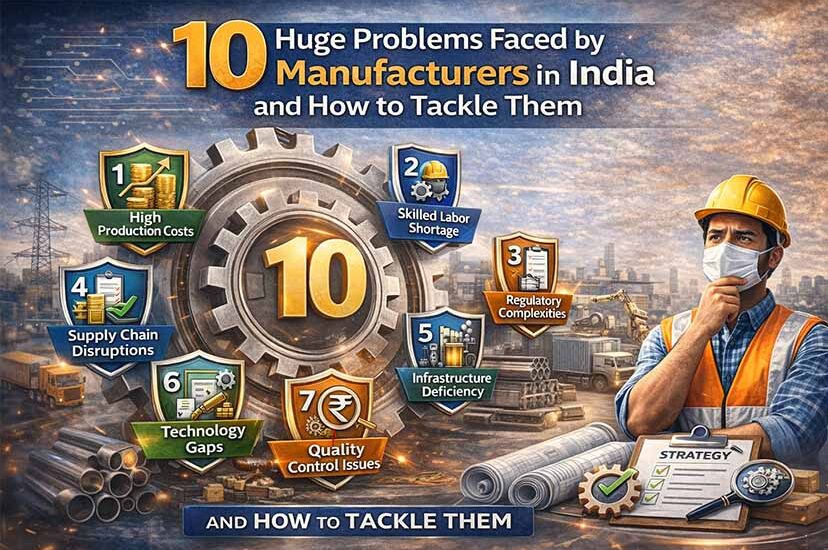
The manufacturing sector is significant to the economic development of India as it creates jobs, enhances exports and enables industrial development. Most manufacturers still struggle with operational and financial difficulties that limit productivity and durable development, even with the strong government efforts and growing domestic demand.
Manufacturers usually work in a complicated business environment due to an increase in the cost of inputs and supply chain problems. Such concerns are particularly challenging for small and medium enterprises. They need to juggle production efficiency and financial security. The way to solve these challenges is through strategic planning combined with obtaining essential financial and operational resources.
Businesses can achieve their operational efficiency goals while protecting sustainable development through their understanding of the main challenges faced by Indian manufacturers. The identification of production capacity needs and operational problems enables manufacturers to develop effective solutions that will boost their market performance in both domestic and international markets.
Key Challenges Affecting Manufacturing Businesses in India
It is necessary to understand the common challenges that are encountered by manufacturers in India before considering the potential solutions. Some of the most important issues that affect production, costs, and the overall growth of businesses are indicated below-
- Limited Access to Working Capital
Limited working capital availability is one of the greatest manufacturing industry problems in India. Manufacturing companies usually require money to acquire raw materials, pay suppliers, maintain inventory, and manage business operations.
However, slow buyer payments or low-credit accessibility may result in the occurrence of cash flow shortages that interfere with manufacturing schedules. Businesses might also find it difficult to deliver constant output or take up bigger orders when they do not have enough working capital.
How to tackle this problem
From structured financing options and including invoice financing, to supply chain finance and working capital loans, help manufacturers to enhance their liquidity. These are financial instruments that enable businesses to obtain finances that are locked up in receivables and keep operations going.
- Rising Raw Material Costs
The rising price of raw materials is another big challenge faced by manufacturers in India. Changes in the prices of commodities, global supply disruption, and transport costs may considerably increase production costs.
In cases where the prices of inputs increase suddenly, manufacturers are unable to hold the profit margins and make their products competitively priced in the market.
What businesses need to do
Businesses can mitigate the risk through developing a diversified supplier network and entering into durable supply contracts. Price volatility can be better handled through strategic inventory planning.
- Supply Chain Disruptions
The contemporary production process is based on effective logistics and supply chain systems. The flow of raw materials and finished goods can be interrupted by transportation delays and geopolitical disruptions.
Such supply chain challenges in manufacturing can delay the production time and affect customer commitment.
How to tackle this problem
Better supply chain visibility, buffer stocks of important parts, and cooperation with several logistics providers are the measures that manufacturers must invest in to minimize the dependence on one supply route.
- Outdated Machinery and Technology
Large numbers of small and mid-sized manufacturers still use old production equipment. This usually results in low productivity, increased costs of maintenance, and product quality.
One of the manufacturing issues in India is the absence of modernization, especially in industries whereby, a modern technology can greatly enhance efficiency.
The solution to this issue
Businesses can modernize equipment gradually by financing equipment or participating in government-sponsored modernization programs. Modern equipment will enhance efficiency in production and the quality of the products.
- Skilled Labor Shortage
Though India possesses a substantial pool of labour force, a number of manufacturers are facing challenges in the search for employees with technical expertise. The disparity between the industry requirements and the trained workforce usually influences the efficiency of production.
The lack of skilled labor is also one of the major challenges in the Indian manufacturing industry, particularly in those industries that need technical skills.
This is what manufacturers need to follow
Manufacturers can collaborate with educational establishments, introduce internal training, and embrace automation technologies to minimize the need to involve manual labour.
- Regulatory Compliance and Documentation
There are various laws that manufacturing companies have to adhere to related to taxation, environmental laws, and labor. These regulatory requirements may be complicated and time-consuming to navigate.
GST compliance and export documentation are some of the manufacturing industry challenges that are complex due to regulatory issues for many businesses.
Way to handle the issue
The introduction of digital compliance systems and advice from regulatory experts can make the work with documentation easier and minimize the chances of compliance errors.
- Delayed Payments from Buyers
Delays by buyers in making payments may also affect manufacturing activities adversely. When the companies deliver goods but are paid after a long gap, their cash flow becomes limited.
It is one of the common financial challenges faced by manufacturers, especially for manufacturers who are dealing with large corporate clients or export customers.
Solution to handle the delay
Invoice financing or trade finance services can also allow the manufacturers to secure the cash flows by converting receivables into working funds.
- High Energy and Utility Costs
Energy consumption is a major operational expense for manufacturing companies. The escalating energy costs and fuel rates are likely to create a high production cost, particularly in energy-consuming industries.
This presents another significant challenge for manufacturers in India, where greater operational costs lower profitability.
The suggestion for this challenge
Businesses may invest in efficient energy-saving machines and embrace renewable energy sources. They can also streamline production processes to utilize less energy.
- Limited Export Financing Support
Indian manufacturers are known to have good export potential; however, they have difficulties with financing when it comes to meeting international orders. Export cycles usually have long payment cycles, which can strain working capital.
Businesses may not be able to venture into international markets due to limited access to export finance for manufacturers.
How to tackle this problem
Companies can take advantage of utilizing trade finance facilities, export credit schemes, and financial strategies that assist exporters in meeting their liquidity requirements in case of long payment terms.
- Intense Market Competition
Globalization and technological advancement are making the manufacturing industry highly competitive. The businesses have to continuously enhance the quality of products and minimize the cost so as to stay competitive.
This increased competition in the manufacturing business compels firms to be creative and streamline their business operations.
How to tackle this problem
One of the ways through which manufacturers can enhance their competitive advantage is by investing in quality control, along with enhancing the efficiency of the supply chain and investing in value-added products.
Key Takeaways on Manufacturing Challenges in India
Indian companies deal with a challenging yet dynamic environment. From inadequate working capital and interruptions in the supply chain to an increase in input costs and regulatory complications, problems like these can significantly affect production efficiency and profitability. Companies that are eager to deal with such issues by undertaking financial adjustments and proper supply chain management can enhance their operational stability. Modern manufacturing approach and financial flexibility allow firms to increase productivity and ensure long-term competitiveness in the changing industrial environment.
Credlix Trading Finance Solutions for Manufacturers
Manufacturers tend to experience liquidity problems by having to deal with the procurement cycles, the production cost, and late payments from buyers. Credlix offers trade finance services that help businesses unlock working capital tied up in invoices. Credlix can help manufacturers keep their production processes flowing and execute larger domestic or export orders without having to pull up cash flow to obstruct their operations.
FAQs–
- What are the biggest problems faced by manufacturers in India?
The typical challenge of the manufacturers in India is low working capital and an increase in the prices of raw materials. Some other issues are disruption of the supply chain and slow payment by the buyers. Such problems may impact efficiency and total profit.
- How can manufacturers manage cash flow challenges?
Financial solutions that manufacturers can use to manage cash flow include invoice financing, along with supply chain finance and working capital loans. These tools assist companies in obtaining funds fast and being able to continue their production processes.
- Why is modernization important for manufacturing businesses?
The use of modern equipment and automation technology has enhanced the efficiency of production and increased the quality of products. Technology upgrading is also an investment that will enable the manufacturers to be competitive in the local and global markets.
