
- March 27, 2026
- Posted by: Rishabh Agrawal
- Categories: HSN code, Blog
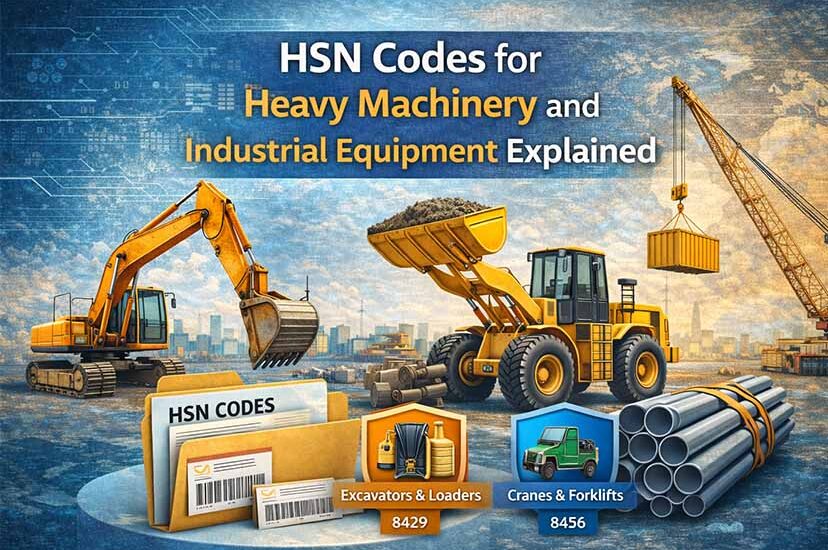
Heavy machinery and industrial equipment are central to infrastructure development, manufacturing expansion, mining operations, and power generation. Whether imported or supplied locally, these assets should be properly classified using the appropriate HSN codes for heavy machinery to make sure that they are taxed, regulated appropriately and cleared through customs easily.
Due to the large invoice value and capital intensity of such goods, simple mistakes in the industrial equipment HSN classification may lead to an unwarranted amount of duty payments, GST discrepancy, delays in shipments, or even being audited. This guide offers a systematic and simplified division of the pertinent chapters of HSN and the generally used codes in 2026.
What Are HSN Codes for Heavy Machinery
HSN codes of heavy machinery are standard classification numbers that are used to denote industrial machines in customs and GST frameworks. These codes define the custom duties, the applicability of the GST, the importation policy conditions and documentation. Security in classification leads to observing compliance, avoiding penalties, and safeguarding project schedules.
Primary HSN Chapters Covering Heavy Machinery
Mainly, heavy machinery and industrial equipment fall under three chapters of the Harmonized System:
- Chapter 84 – Industrial equipment and mechanical machinery.
- Chapter 85 – Electrical equipment and power equipment.
- Chapter 87– Specialized industrial and off-highway vehicles.
The individual chapters encompass a particular sets of equipment. Below is a clear breakdown.
Chapter 84 HSN Codes for Mechanical and Industrial Machinery
Most of the heavy-duty mechanical equipment utilized by the construction, mining, manufacturing, and processing industries is found in Chapter 84.
| HSN Code | Machinery Category | Typical Application |
| 8413 | Industrial Pumps | Oil handling, water systems, chemicals |
| 8414 | Air and Gas Compressors | Manufacturing plants, processing units |
| 8426 | Industrial Cranes | Construction and infrastructure |
| 8428 | Conveyors and Lifting Equipment | Warehousing and material handling |
| 8429 | Bulldozers and Loaders | Infrastructure and earthmoving |
| 8430 | Excavators and Mining Machinery | Mining and heavy construction |
| 8457 | CNC Machines | Precision manufacturing |
| 8462 | Hydraulic Press Machines | Metal forming industries |
| 8474 | Crushing and Screening Equipment | Cement and mining sectors |
| 8479 | Special Purpose Machinery | Custom industrial equipment |
These are fundamental HSN codes for construction machinery and manufacturing equipment.
Chapter 85 HSN Codes for Electrical Industrial Equipment
Chapter 85 covers electrically powered heavy machinery and power generation.
| HSN Code | Equipment Type | Industrial Use |
| 8501 | Electric Motors | Industrial production lines |
| 8502 | Diesel Generator Sets | Power backup and generation |
| 8504 | Transformers and Converters | Power distribution systems |
| 8514 | Industrial Electric Furnaces | Metallurgy and heavy manufacturing |
The HSN codes for electrical machinery should be accurate, as the duty rate varies across subheadings.
Chapter 87 HSN Codes for Industrial Vehicles and Off-Highway Equipment
Some of the transport machinery in heavy industry falls under Chapter 87.
| HSN Code | Vehicle Type | Application |
| 8701 | Industrial and Agricultural Tractors | Agriculture and site operations |
| 8704 | Off-Highway Dumpers | Mining and heavy material transport |
The codes are applicable in the HSN classification of mining vehicles and heavy transport equipment.
How to Identify the Correct HSN Code
The choice of the HSN code for heavy equipment requires:
- Examination of technical product specifications.
- Knowledge of major operations and their use.
- Checking explanatory notes under the Harmonized System
- Verifying schedule of customs tariffs.
- Consulting classification rulings when necessary
Misclassification may lead to incorrect customs duty calculation or GST mismatches.
GST Implications for Heavy Machinery
HSN codes determine GST treatment in domestic transactions. The majority of heavy machinery will be subjected to 18 per cent or 28 per cent GST, depending on the category.
Maintaining consistency between customs documentation and GST invoices under the proper machinery HSN code structure is important so that there are no errors in reconciliation in case of an audit.
Compliance Considerations for Machinery Imports
Importing of heavy machinery may entail:
- BIS certification for specified products
- Import licensing in restricted categories
- Detailed valuation documentation
- Technical specifications in Bills of Entry
- Correct declaration under the customs tariff classification system
Active compliance management will avoid shipment detention and demurrage charges.
Working Capital Impact of Industrial Equipment Imports
The imports of heavy machinery usually include:
- High upfront supplier payments
- Significant customs duty outflows
- Freight and insurance costs
- Extended installation timelines
These aspects increase the cash conversion cycle. Companies that import capital intensive machineries should consider liquidity in order to prevent operational pressure.
Strengthening Compliance Through Structured HSN Management
Proper HSN classification of heavy machinery is not just a tax formality. It has a direct influence on customs duty liability, GST compliance, regulatory approvals and financial forecasting. With the growth of infrastructure and industrial investment in 2026, businesses should adopt structured HSN code management systems to minimize risk and ensure business efficiency.
Accurate classification ensures controlling costs, regulatory clarities and easier implementation of capital-intensive projects.
Credlix Supporting Industrial Importers with Stronger Liquidity Control
High-value imports of machinery may lock substantial working capital before they can be converted into revenue. Credlix helps the industrial importers to maximize liquidity with the help of digital trade finance services that allow the cash flow to be more visible and enhance the working capital efficiency. Credlix enables businesses to expand infrastructure and manufacturing operations without fear of financial pressures by alleviating that financial pressure in long project cycles.
FAQs–
- What HSN chapter deals with the majority of heavy machinery?
Chapter 84 covers mechanical machinery, Chapter 85 deals with electrical industrial equipment, and Chapter 87 consists of specialized industrial vehicles.
- What is the importance of proper HSN classification of heavy equipment?
Proper classification will lead to the right customs duty payment, proper GST reporting, and the avoidance of compliance fines or delays in shipment.
- Is there a need for extra approvals for heavy machinery imports?
Yes. Depending on the requirements posed by the regulations, some of this equipment might need to be BIS certified, have import licenses, or be provided with documentation of technical compliance
