
- June 3, 2026
- Posted by: Rishabh Agrawal
- Categories: Export Financing, Blog
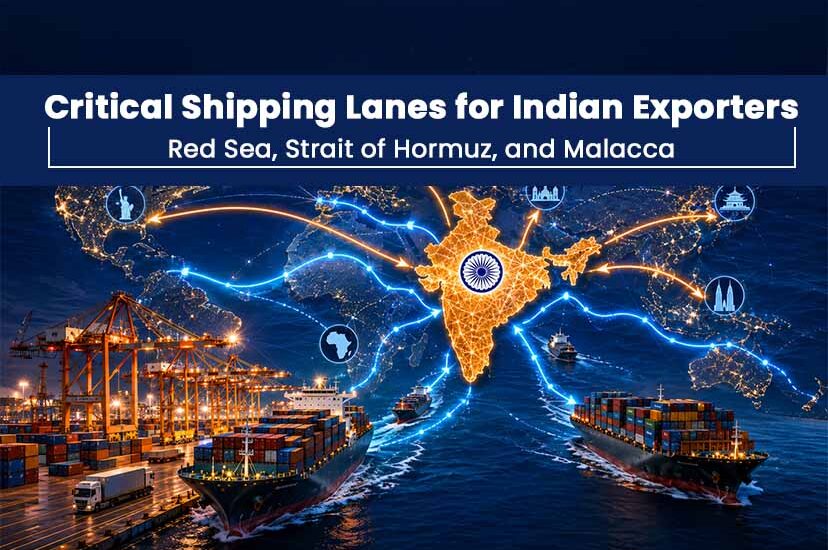
World trade relies on certain extremely strategic shipping corridors. For Indian exporters, the Red Sea shipping route, the Strait of Hormuz, and the Strait of Malacca are some of the most important corridors. These shipping lanes carry huge volumes of international traffic annually and directly impact the export connectivity of India with Europe, the Middle East, Africa and East Asia.
Over the last few years, these trade routes have proven to be vulnerable due to geopolitical tensions, military conflicts, piracy threats, and instability in the region. The routes that were once considered simply logistical are now having an important influence on global freight pricing, shipment reliability, export competitiveness, and working capital management practices of exporters.
For Indian businesses involved in international trade, disruptions across these shipping lanes are no longer distant geopolitical developments. They have a direct impact on shipment timelines, inventory cycles, freight costs, buyers’ trust, and overall cross-border trade operations.
Why Strategic Shipping Lanes Matter for Indian Exporters
Maritime trade is a pillar of India’s export economy, with most of the country’s international trade passing through sea channels. These corridors link Indian ports to the key global markets and are instrumental for the following sectors:
- Engineering goods
- Textiles and apparel
- Pharmaceutical exports
- Chemicals and petrochemicals
- Electronics
- Agricultural commodities
In the event of major shipping routes being disrupted, exporters experience operational stress immediately. Late deliveries may extend lead times, cause delivery delays, lead to inventory bottlenecks, and slow receivable realization.
When exports are on thin margins or in quick turnarounds, delays of any kind can cause significant liquidity pressure and uncertainty for exporters.
The Red Sea Route: Understanding Why it is a Major Global Trade Risk
The Red Sea corridor is the link between the Indian Ocean and the Mediterranean Sea. It has had a key role in global trade for a long time now. This can be attributed to the fact that it is the shortest sea route between Asia and Europe.
A significant share of Indian exports to Europe traditionally passes through this corridor. Several shipping lines around the world are now rerouting their shipping lanes around the Cape of Good Hope in Southern Africa due to geopolitical tensions continuing to rise and attacks against commercial vessels continue in the region
This rerouting has a significant increase in-
- Voyage duration
- Fuel consumption
- Freight costs
- Marine insurance premiums
- Cargo uncertainty
For Indian exporters, the effects go beyond shipping costs. Extended transit times increase the export working capital cycles and push back payment.
The Red Sea disruption has also exposed the fragility of global supply chains when even one strategic maritime corridor is subject to extended instability.
How the Strait of Hormuz Impacts The Trade Ecosystem Of India
It is one of the most important energy corridors in the world. The Strait of Hormuz is situated between the Persian Gulf and the Gulf of Oman. A vital point for global oil and gas transportation.
The Strait holds significance for India beyond the energy sector. It plays a vital role in the overall trade and logistics activities of the country. The Indian economy is highly vulnerable to any instability in the region. A significant part of Indian crude oil imports goes through this corridor.
Any disruptions to Hormuz can result in-
- Rising fuel prices
- Higher shipping costs
- Inflationary freight pressure
- Increased logistics expenses
- Marine security concerns
This puts an indirect yet heavy pressure on the exporters. Increased fuel and transportation expenses have repercussions on the manufacturing economics and global trade competitiveness.
Conflicts in the region tend to affect the energy-intensive industries. The strategic significance of the corridor can affect freight markets as well as shipping insurance rates in times of uncertainty when the corridor is not closed.
The Strait of Malacca and The Trade Dependency Of Asia
The Strait of Malacca is one of the busiest shipping lanes in the world between Malaysia and Indonesia. It is a critical passage for the Indian Ocean to the Pacific Ocean and for the economies of East Asia.
India’s exports to:
- China
- Japan
- South Korea
- Southeast Asia
This sea route is of critical importance for their cargo transport and regional supply chain.
The Malacca Strait is not now connected with any significant military struggle, as are the Red Sea or the Hormuz. But there are also several operational challenges along the way, such as:
- Shipping congestion
- Piracy concerns
- Navigational bottlenecks
This corridor will continue to be under pressure due to escalating trade volumes from Asia. The disruption or congestion in Malacca can impact Indian exporters who are part of the Asian manufacturing value chain in the following ways:
- Inventory rotation
- Production scheduling
- Component sourcing
- Shipment predictability
It’s particularly vital for companies that have just-in-time manufacturing systems and fast-moving export cycles.
Why Shipping Lane Disruptions Create Financial Pressure for Exporters
Disruptions to shipping are first considered by most exporters as logistics issues. In reality, the costs can be far greater.
When shipping times are extended and freight schedules become irregular, the following situations typically occur:
- Delayed receivables
- Extended inventory holding periods.
- Shipment uncertainty
- Buyer renegotiations
- Rising logistics costs
- Slower cash conversion cycles
These problems have direct implications for the working capital management of the company.
Prolonged shipment delays can create severe liquidity stress for MSMEs because operational expenses continue regardless of delayed payment realization. Manufacturers still have to deal with:
- Supplier payments
- Employee salaries
- Production costs
- Warehouse expenses
- Export commitments
This means that maritime disruptions create significant trade finance challenges.
How Global Buyers Are Responding to Shipping Uncertainty
Repeated disruptions in major shipping corridors have been frequent. International buyers are also adapting their procurement strategies.
Many global importers are now focusing on-
- Diversified sourcing strategies
- Inventory risk management
- Regional warehousing
- Supplier reliability
- Shipment visibility
This imposes further strain on exporters to keep up their day-to-day business while facing disruptions from outside.
The logistics planning and supply chain resilience of businesses is increasingly becoming a competitive advantage in international trading markets.
Could These Risks Permanently Reshape Global Supply Chains?
The continuing insecurity in transit corridors is beginning to impact global trade planning in the long term.
Several foreign enterprises are rethinking:
- Sourcing concentration risks
- Shipping route dependency
- Regional manufacturing models
- Inventory positioning
- Supply chain diversification
This does not mean conventional shipping paths are becoming irrelevant. But it does imply that businesses are starting to take cautious efforts to avoid depending entirely on one route.
These advancements represent both challenges and advantages for India. Companies who are more likely to be able to change their operations and make swift judgments would profit.
Why Export Liquidity Is Becoming More Important During Shipping Disruptions
In times of transit uncertainty, stable liquidity becomes extremely crucial for exporters.
Longer shipment cycles tend to lead to:
- Delayed invoice realization
- Slower payment recovery
- Higher inventory exposure
- Extended operational cash flow pressure
In these situations, exporters need financing arrangements that can meet ongoing needs while they are waiting for their shipments.
That is where export factoring and contemporary trade finance solutions are becoming more helpful for companies facing international trade uncertainty.
How Maritime Risk Is Becoming a Core Export Strategy Issue
As several key trading corridors became increasingly precarious, the world trade risk was no longer just constituted by tariffs or market fluctuations. Maritime security and supply chain resilience are all gaining significance in affecting export performance.
For Indian exporters, this highlights the need to be well aware of the strategic significance of critical sea routes and devise an effective plan for their operations. Only the companies that can integrate logistics flexibility into their business management and embrace robust financial management approaches stand a good chance of surviving global trade disruption in the future.
Strengthen Export Stability with Credlix Trade Finance Solutions
The volatility of global shipping can have a major impact on exporter liquidity cycles, particularly as receivable realization slows due to longer shipping times.
As an export factoring, invoice financing, and collateral-free trade finance provider, Credlix enables exporters to enhance their working capital stability. Access to quicker liquidity for export receivables allows companies to effectively deal with shipment delays and cash flow needs. This allows exporters to be in a better financial position even when facing geopolitical risks and sea disruptions.
FAQs
Why is the route of the Red Sea significant for the Indian exporters?
This shipping corridor is one of the shortest sea passages between India and Europe via the Suez Canal. It plays a significant role in international trade and export.
How is the Strait of Hormuz related to the trade in India?
It is one of the vital international energy corridors. Any disruption in the region can lead to an increase in fuel prices and the overall logistics prices for Indian exporters.
Why is the Strait of Malacca important strategically?
It links the Indian Ocean to the East Asian trading markets. It is also vital to the transport of cargo between India and China, Japan, and the economies of Southeast Asia.
