
- June 19, 2026
- Posted by: Rishabh Agrawal
- Categories: Export Financing, Blog
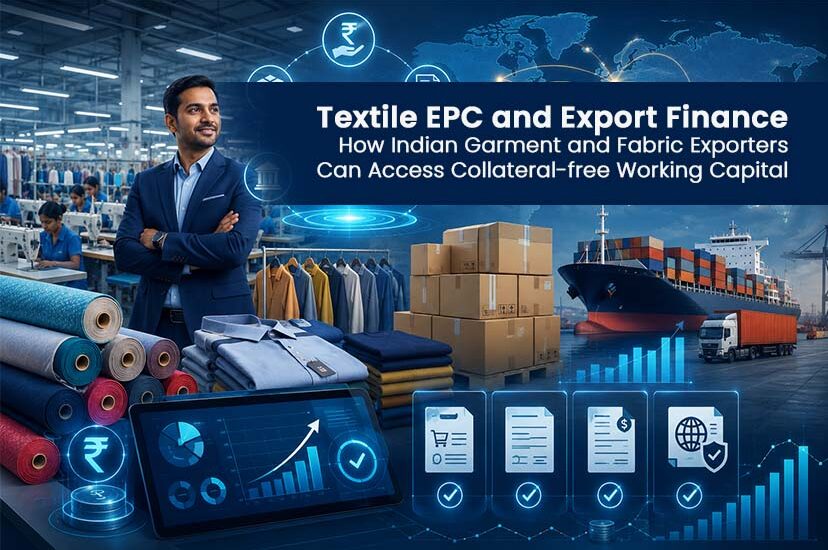
The textile industry continues to be a key part of India’s exports, catering to buyers in North America, Europe, the Middle East, and other emerging markets. As more buyers around the world look for alternative sourcing options and manufacturing partners they can trust, growth prospects are growing for a lot of garment exporters. But placing orders for large product quantities demands a significant investment in raw materials, manufacturing, stock control, supply chain, and labor well before export earnings are generated.
This makes the provision of access to collateral-free working capital a common challenge in the industry. Exporters with strong order books and reliable buyers are unable to get timely finance because the traditional financing system might rely on asset-backed financing. Therefore, MSME export financing is getting more prominent in the textile industry to scale business, have long receivable cycles, or to enhance the export finance capabilities of textile businesses.
What is the Working Capital Challenge in Textile Exports?
The need for working capital for exporters arises because the costs are usually paid for long before the money is received. In the textile industry, there are continuous funding needs related to procurement, production, holding inventory, and shipping, so access to the correct textile industry finance is crucial for the continuity of operations.
Why Textile And Garment Exporters Often Face Funding Gaps?
The textile sector has long production and payment cycles, which can put a strain on liquidity. The common cash flow challenge in textile exports is that the raw materials must be purchased, the production cycle should be continued, and export orders should be completed before receipt of payment from the buyers. These time lags frequently put a strain on available working capital.
At the same time, effective export payment cycle management has become increasingly important as buyers negotiate longer credit terms and global competition intensifies. Getting funding for garment exports is not just a matter of coping with short-term shortages for many businesses. It can be required for big orders, growing production volumes, and regular export activities without disturbing the daily business activities.
What Is Textile EPC And Why Does It Matter?
The Textile EPC (Export Promotion Council) is very crucial to the textile export ecosystem as it represents the industry, conducts market development initiatives, promotes exports, and interacts with policymakers. Various forms of textile export promotion provide easy access to international opportunities and improve the competitiveness of Indian textiles in international markets.
In addition to the trade development efforts, organizations within the export ecosystem frequently build awareness of compliance, market access, and financing opportunities. As discussions around export finance for the textile industry keep increasing, many MSME exporters are aware of financing options that can help in bridging the gap of working capital and help them export more in the long run.
Where Exporters Typically Need Working Capital The Most?
The textile exporters often need funding at various stages of the export process. The following are some of the more frequent pressure points–
- Raw Material Procurement
The textile industry financing becomes vital, especially when raw materials are going to be purchased. Cotton, yarn, fabric, dyes, trims, and other inputs may require a high initial investment before production can start and revenue can be generated.
- Production And Manufacturing
Some companies need extra funding for garment manufacturers in the production process. Manufacturing commitments, factory operations, quality control processes, and labor costs occur even if the export payments are ultimately received.
- Inventory Holding
Inventories can be a major requirement for working capital exporters. Finished goods may remain in storage while awaiting shipment schedules, documentation approvals, or buyer instructions, tying up valuable financial resources.
- Export Order Fulfillment
While large export orders can bring a lot of growth, they also have a high funding demand. But effective export order financing can help businesses to complete larger orders without overtaxing liquidity.
Collateral-Free Funding Options Available To Exporters
There are a number of financing options available to exporters today that can help them minimize the need to rely on traditional financing options with collateral.
- Invoice Financing
Invoice financing for exporters gives businesses the freedom to access liquidity from unpaid invoices instead of waiting for buyers to complete payment cycles. This can enhance cash flow and maintain business operations.
- Export Receivables Financing
In export receivables financing, exporters can avail a finance facility based on their unpaid export receivables generated from completed export transactions. This can help to keep future payment commitments in the short term and use the money to work across the business.
- Trade Finance Programs
New trade finance solutions are becoming more geared towards the needs of exporters with long payment terms and increased orders. These solutions tend to be based on the strength of the transactions and the quality of the receivables, rather than on the typical collateral-based approach.
- Working Capital Facilities
A number of institutions now provide business funding in the form of collateral-free business funding, which is tailored for exporters. These facilities can be used to control the operation expense, procurement needs, and production commitments of businesses without committing large physical assets.
Access To Finance Can Influence Export Growth
Having robust MSME export finance capabilities has a significant impact on the exportability of an exporter to explore new opportunities. Companies that have enough working capital to buy materials, grow production, and meet the demands of their customers promptly can be better positioned.
Funding is often a key factor for garment and fabric exporters in accepting orders, expanding market presence, and acquiring new customers. The ability to access finance at the right time is no longer just a facilitating process. It is increasingly becoming a competitive advantage within the global textile trade.
Credlix: Turning Export Receivables Into Growth Capital
For many exporters, growth opportunities are often constrained not by demand but by working capital limitations. With tech-enabled trade finance products, Credlix enables exporters to release liquidity from receivables that are not liquidated and transform future payments into cash. Credlix’s invoice financing services for exporters empower companies to boost their cash flow, optimize procurement cycles, and confidently seize bigger export opportunities. These export working capital solutions alleviate funding constraints, enhance operational continuity, and guarantee healthy financial agility during the export lifecycle for textile companies. This allows exporters to concentrate on order fulfillment and market expansion instead of waiting for extended periods for the payment cycles to end.
FAQs
Can textile exporters get collateral-free working capital?
Yes. Receivables-based funding and invoice financing are some of the financing options that can help to get working capital without providing substantial collateral.
What are the most suitable finance options for the garment exporters?
Various factors like the size of export volume, receivable cycles, funding needs, and business goals dictate the most appropriate choice. Exporters most often utilize invoice financing and receivable-based solutions.
How does invoice financing help export growth?
Invoice financing benefits exporters by freeing up cash that is tied up in unpaid invoices. It enhances cash flow and allows businesses to finance their procurement, production, and order fulfillment processes more effectively.
