
- June 22, 2026
- Posted by: Rishabh Agrawal
- Categories: Export Financing, Blog
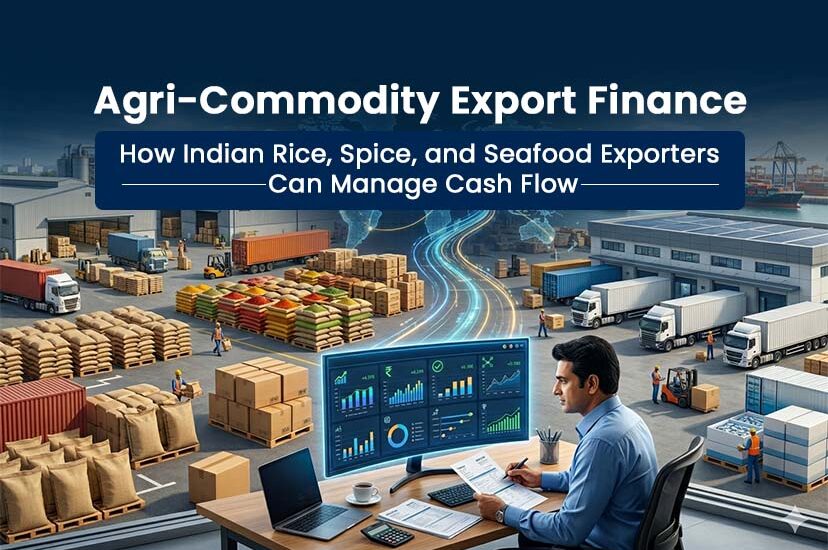
India ranks among the leading suppliers of agricultural products worldwide, supplying buyers across Asia, the Middle East, Europe, Africa, and North America. Whether it is high-quality rice variety, processed seafood products, or a wide variety of spices, Indian agri commodity exports continue to be an important part of the global food value chains. International demand creates opportunities for rice exporters, spice exporters, and seafood exporters to expand their businesses to new markets and build better, long-term relationships with their buyers.
But the involvement in export often comes with the issue of liquidity management during long export cycles. Extended transportation periods, documentation, customs clearance, and buyer credit terms are common characteristics for agricultural shipments that result in a delay of payment realization. At this time, exporters will still have to continue their procurement, processing, inventory, and operational costs. Hence, the importance of agri export finance and good export cash flow management has grown stronger for businesses in order to achieve operational continuity while dealing with the long international trade cycle.
Understanding Cash Flow Challenges In Agri Exports
The need for Working capital for exporters is especially significant for exporters who ship merchandise weeks or months in advance of receipt of payment. Additionally, longer time periods of transportation and buyer credit within agricultural trade often lead to funding gaps, which can make it essential to access suitable agri export finance solutions.
Why Long Transit Cycles Create Funding Pressure
Agriculture exports frequently have a substantial time lag from dispatch to the realization of payment. Depending on the destination markets, shipping schedules, port activities, and customs procedures, products may take several weeks to transit. These long transit cycles may cause delays in obtaining revenue even after successful export orders are placed.
Meanwhile, exporters cannot pause business operations while waiting for payments. The procurement process, processing costs, logistics obligations, and supplier commitments continue throughout the export cycle. This can leave a significant working capital shortage when combined with occasional export payment delays. This proves that cash flow management is of critical importance for exporters to ensure smooth operations and support future export opportunities.
What Makes Agri-Commodity Export Cash Flow Different?
Operational realities associated with agricultural exports can also make funding cycles longer in comparison to other export sectors.
- Seasonal Procurement Cycles
Exporters often have to make substantial orders for agricultural products at particular times during harvest and only within a fairly limited timeframe. Agricultural commodity financing can also assist businesses in accessing raw materials in favorable market conditions and having adequate liquidity for sustained operations.
- Inventory And Storage Requirements
The agricultural products have to be kept in a warehouse, preserved for quality and temperature control, and handled for inventory before shipment. Assistance for commodity inventory financing can help exporters cope with these costs without undue strain on working capital.
- International Shipping Timelines
Export shipments may remain in transit for longer periods than domestic shipments. Payment realization and funding needs can be affected due to the various factors that influence the overall export transit period. It includes destination markets, shipping routes, customs procedures, and logistical coordination.
- Buyer Credit Terms
Many international buyers negotiate credit terms that go beyond the time of delivery of the goods. With the help of effective export receivables management, businesses do not experience a lack of liquidity that could hinder future procurement and export operations.
Where Rice, Spice, And Seafood Exporters Typically Need Funding
Export requirements may occur at many points in the export process, well before the time of receipt of the buyer’s payment.
- Procurement From Farmers And Suppliers
Agricultural exporters often make substantial investments in farmers, cooperatives, processors, and suppliers. Agri supply chain finance is another useful tool for assuring businesses have stable inventory and supplier relationships during the procurement cycles.
- Processing And Packaging
Before the products are ready for export, they have to undergo cleaning, grading, processing, packaging, labeling, and quality assurance, all of which require investment. Food export finance can assist companies to meet these operating needs more efficiently.
- Storage And Logistics
Running costs continue in warehousing, cold storage, freight coordination, booking containers, and transport arrangements throughout the export operation. These obligations can be managed with effective export working capital solutions to ensure the continuity of operations.
- Shipment And Payment Waiting Period
There can be a lot of cash flow challenges from the time of shipping to the time of the final payment. Export invoices can be used for access to working capital to maintain business operations until the money is received.
Financing Strategies Exporters Use To Bridge Long Payment Cycles
Special financing is offered by many exporters to mitigate the liquidity crunch caused by the extended payment and transit period.
- Export Receivables Financing
Export receivables financing is a facility available for businesses to access funds against outstanding receivables generated from completed export transactions. His approach allows exporters to get the liquidity without awaiting payments from buyers.
- Invoice Financing
Invoice financing for exporters allows companies to convert unpaid invoices into working capital that can be used for business operations, procurement, production, and logistics. This aids in making cash flow more predictable throughout the long export process.
- Trade Finance Facilities
Smart trade finance solutions are built to ease exporters’ shorter payment cycles and increased orders. These solutions will allow businesses to keep their cash flow without any hassle and never miss out on customer commitments.
- Collateral-Free Funding Options
Many exporters explore forms of collateral-free export finance that reduce dependence on lending based on assets. These solutions can offer more flexibility and help to finance working capital needs during the export process.
Building Financial Stability Across Longer Export Cycles
With the growth of global agricultural trade, effective agri export finance will continue to play a significant role in the success of operations. Exporters who actively control their liquidity positions may have a greater advantage in dealing with the seasonal buying cycles, international shipping lead times, and changing customer preferences.
Effective cash flow management for exports is not just a matter of meeting short-term funding needs. It allows businesses to remain resilient and enhance their competitive edge in a rapidly growing global landscape. Having access to reliable working capital for exporters can therefore become a critical factor in sustaining export operations in the long term.
Credlix: Unlocking Working Capital During Long Export Transit Cycles
For agricultural exporters, long shipping timelines and extended payment cycles can create significant liquidity pressure even after goods have been successfully dispatched. With technology-backed trade finance solutions, Credlix enables exporters to release blocked funds from outstanding receivables and turn future payments into working capital that can be used immediately. Credlix’s export receivables financing solution helps businesses enhance the management of their working capital, increase transparency in cash flow management, and ensure business continuity amid long export processes. This enables the exporters to concentrate on procurement, production, logistics, and commitments to customers without being tied up by delayed payment realization.
FAQs
Why do agricultural exporters face cash flow challenges?
Agricultural exporters often experience delayed payment realization due to long transit periods and international shipping timelines. Operational expenses continue throughout the export cycle.
What is export receivables financing?
Under export receivable financing, an exporter can avail working capital based on their export bills and export receivables instead of waiting for payment from their buyers.
Can rice, spice, and seafood exporters use collateral-free financing?
Yes. There are several financing options available to assist exporters in obtaining working capital without depending on the traditional structure of lending, where goods and services are used as collateral
