
- July 10, 2026
- Posted by: Rishabh Agrawal
- Categories: Import Factoring, Blog
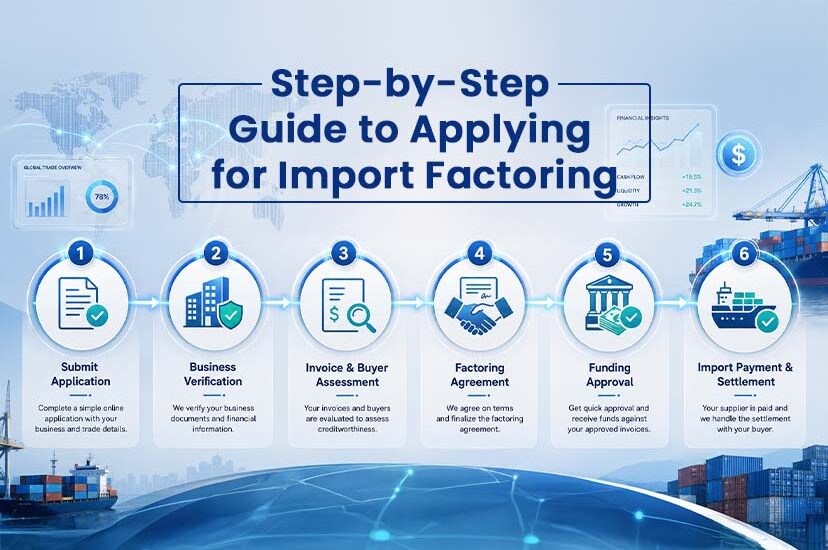
Businesses seeking quality products, cost-competitive pricing, and reliable suppliers are turning to global sourcing as a vital growth strategy. However, enterprises may be forced to make payments to overseas suppliers before getting paid by their customers for the exported goods. This can create a funding shortfall, making operations more challenging, especially if the company is involved in frequent cross-border shipments. Consequently, import factoring is becoming an essential tool for many importers to ensure they have adequate cash flow and can pay their suppliers on time.
From raw materials and machinery to consumer goods and industrial parts, having timely finance can make a difference to your business when dealing with imports. By knowing the application process, you can increase your probability of approval rapidly and select a financing solution that is more suitable for your trade needs. This guide explains how businesses can effectively apply for trade finance solutions and avoid typical pitfalls.
What is Import Factoring?
Import factoring is a trade financing instrument which allows an importer to finance imports from an overseas supplier through a factoring provider. It enables companies to improve liquidity, meet supplier payment terms, and ensure a steady flow of imports without placing excessive pressure on working capital.
Why Businesses Are Choosing Import Factoring
Extended payment cycles, volatile exchange rates, and large initial investment costs are part of international trade. Importers need to make arrangements with suppliers well in advance of the sale of the product in their domestic market. Not having adequate working capital finance can impact a company’s ability to meet purchase orders or take advantage of a good purchase opportunity.
Import factoring helps overcome this challenge; it acts as a medium between the payment of the supplier and the revenue generation. This shows that businesses don’t just need to rely on traditional loans; they can also access loans based on actual trading deals. This is especially important for businesses with seasonal demand, new markets, or growing procurement volumes, making import finance a valuable resource for them.
How to Apply for Import Factoring
Import factoring is a systematic application process. By having the proper information and knowledge of each step, businesses can secure financing more efficiently.
- Assess Your Financing Requirements
Take time to assess the financing needs of your business before seeking out a financing provider. Consider quantities purchased, terms of payment, the frequency of shipments, and expected cash flows. A clear understanding of these requirements helps determine whether import factoring services are the right fit for your business.
- Choose the Right Financing Partner
Not all financing providers will have the same flexibility and expertise. Seek a partner who has experience in international trade, clear pricing, digital transactions, and cross-border experience. Choosing the right global trade finance provider can enhance your financing experience.
- Organize the Required Documents
A fully documented application process shortens the process and eliminates unnecessary delays. Most financing providers will request business and transaction-related documents to assess a request.
| Document | Purpose |
| Business registration documents | Establishes the fact that business is legal. |
| KYC documents | Ensures that businesses are identified and compliant. |
| Purchase orders | Validates the next import transaction. |
| Supplier invoices | Supports financing requirements |
| Shipping documents | Verifies transportation of goods. |
| Bank statements | Assesses financial position. |
| Financial statements | Evaluates business performance. |
The import factoring application process goes a lot smoother when these applications are prepared in advance.
- Fill out the Credit Assessment
Once the application is submitted, the financing provider assesses the business, business suppliers, and transaction information. The history of trading, repayment ability, relations with suppliers, and transaction risk are generally taken into account. Having a well-documented application increases the chances of obtaining cross-border financing promptly.
- Review the Financing Agreement
Once approved, check the financing agreement before signing it. Be aware of the funding limits, fees, repayment terms, settlement processes, and any conditions. Knowledge of these details ensures that businesses are able to leverage the trade finance facilities effectively without getting into any unwanted commitments.
- Receive Funds and Continue Trading
Once the agreement is finalized, the financing provider will disburse the money as per the sanctioned transaction. Businesses can complete supplier payments, receive uninterrupted importation and ensure smooth operation of the business. Business cash flow solutions ensure that importers can concentrate on growing trade and not short-term funding difficulties.
Common Mistakes to Avoid When Applying for Import Factoring
Knowing these common pitfalls can increase your chances of approval and guide businesses to make wise financing choices.
- Incomplete Documentation
There may be delays in the evaluation process if the documents are missing, such as invoices, purchase orders, shipping records, or financial documents. Accurate records and documents facilitate the import factoring application and eliminate the need for unnecessary communication back and forth.
- Choosing a Financing Partner Based Only on Cost
The lowest financing cost does not always provide the best value. Other factors, such as turnaround time, digital capabilities, industry experience, customer support, and flexibility, should also be considered for businesses. Competitive pricing is just the first step; a reliable trade finance partner can make a significant contribution to long-term business growth.
- Ignoring Supplier Payment Terms
Each foreign supplier has their own payment terms. When financing does not match agreed payment terms, it can impact supplier relations and future procurement opportunities. Businesses can make better use of the supplier finance solutions if they understand the requirements.
How Credlix Makes Import Factoring Simpler and Faster
Effective international trade management is not just about the availability of finance. It requires a financing partner that understands the pace and complexity of cross-border transactions. The technology-driven solutions offered by Credlix make the import factoring process easy, fast, transparent, and efficient for businesses to access working capital. Credlix provides businesses with the ease to fund their imports without delays. Enhancing liquidity and ensuring regular payments to suppliers can also bolster supplier relations globally. It helps businesses manage their procurement with confidence, allowing them to further develop their international trading operations.
Strengthening Your Import Strategy with Smarter Financing
Importing successfully is not only about finding the right suppliers; it also depends on healthy cash flow throughout the import purchasing cycle. If businesses are familiar with the process of import factoring and prepare their applications effectively, they will have a better chance at gaining timely financing and maintaining their supply chains.
With the ever-changing nature of international trade, import factoring is gaining traction as a viable option for companies looking for more flexibility. By utilizing the right financing strategy, importers can capitalize on new sourcing opportunities and contribute to sustainable growth in their business.
FAQs–
- Who is eligible to apply for import factoring?
For businesses that conduct regular import transactions from overseas suppliers, import factoring can be obtained if there are actual trade transactions and the business fulfills the financing company’s requirements for eligibility requirements. This is a typical solution adopted by manufacturers, wholesalers, distributors, retailers, and import-export companies for better liquidity, payment control to suppliers, and uninterrupted procurement activities.
- What documents are usually required for an import factoring application?
While it depends on the financing provider, most require business registration information, KYC paperwork, purchase orders, supplier invoices, shipping records, bank statements, and financial records. Complete and accurate information speeds up the import finance process and minimizes delays in the verification and credit assessment process.
- Does import factoring work for small and medium-sized businesses?
Yes. Small and medium-sized enterprises use import factoring services that require improved cash flow without making any commitment to business loans. It allows SMEs to pay overseas suppliers promptly, keep inventories, meet customers’ orders, and boost potential for expansion of overseas exports without affecting working capital to pay their suppliers
