
- September 25, 2026
- Posted by: Rishabh Agrawal
- Categories: Invoice discounting, Blog
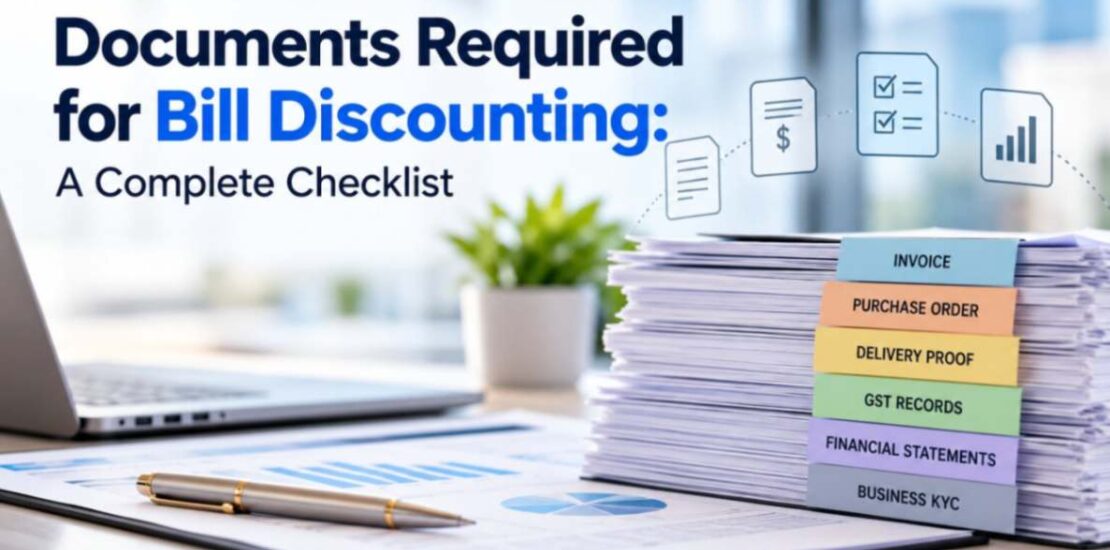
A business frequently requires working capital before customers pay its outstanding invoices. To help fill this gap, Bill discounting is available to enable eligible businesses to obtain funds before the due date of the bills. But the finance procedure relies on the correct documentation.
From business registration information and financial statements to invoices and purchase orders these are all vital in creating a sense of legitimacy in the transaction and underlying receivable. These records being organized can lead to a more efficient application process and can minimize unnecessary delays.
Understanding Bill Discounting
Bill discounting is a short-term financing arrangement where a business receives funds against an eligible bill or trade receivable before the buyer’s payment becomes due. The financier provides funds after evaluating the transaction and applicable terms.
Core Documents Required for Bill Discounting
Typically, documents for bill discounting will include details about the business, its financial standing, and the transaction. Specific requirements may vary from financier to financier, and by transaction.
Common bill discounting documents are:
- Trade Invoices: The trade invoice defines what should be paid, who the buyer is, what terms are to be observed and what value the deal constitutes.
- Purchase Orders: These are useful to create the link between the order and the invoice, as they reflect a real commercial order.
- Proof of delivery: Delivery challan, goods receipts or other relevant documents may show that the goods or services were delivered.
- Buyer Acceptance: If applicable, it can be evidence that the receivable is valid, as confirmed or accepted by the buyer.
- Bank Statements: Recent bank statements can be reviewed to gain insight into the cash flow of the business and bank activity.
- GST Records: Information regarding the business and transactions may be sought from the GST registration and return records.
- Business KYC documents: This includes PAN, Business Registration Certificates, and Authorized Signatory details, aiding in the identification and legal standing of the business.
It is important to have consistent records, as discrepancies between the invoice, purchase order, delivery data and the accounting data might impose additional verification.
Financial Documents Financiers May Request
Financial records can support bill discounting eligibility and help verify the business’s financial position.
- Balance Sheet
- Profit and Loss Statement
- Cash Flow Statement
- Bank Statements
- GST Returns
- Income Tax Returns
- Receivables Ageing Report
- Outstanding Invoice Statement
Invoice and Buyer Documents That Matter
The financing is tied to an underlying receivable, and thus the invoice is at the centre of most documents used in bill discounting. The financier needs sufficient evidence to establish that the invoice is in fact a valid business transaction and that the buyer listed on the invoice will pay for the goods.
Essential records may consist of:
- Invoice number and date
- Buyer name and business details
- Invoice value and applicable taxes
- Agreed payment terms
- Purchase order or contract
- Delivery or service completion proof
- Buyer acceptance or confirmation, where relevant
- Details of previous or outstanding transactions with the buyer
The value of the information that the buyer receives may also be a factor in determining the value of the receivable. Well-stated payment terms and transaction documentation facilitate the determination of the nature and the maturity of payment due.
For companies that utilize trade receivables financing, it is valuable to have a complete record from the purchase order number to the invoice and delivery.
Business Documents for Bill Discounting
These documents establish the business’s identity and are commonly included in an invoice discounting documents checklist.
- PAN Card
- GST Registration Certificate
- Certificate of Incorporation/Business Registration
- Address Proof
- KYC Documents
- Director/Partner Details
- Authorised Signatory Details
- Bank Account Details
All of the above documents are not needed for all applications. Conditions may differ from one financing party to another, depending on the nature of the financing, business, buyer, the structure of the transaction and the nature of the receivable.
Having these records ready in advance can help businesses respond quickly with documentation when necessary and prevent undesirable back-and-forth during the financing process.
Common Documentation Issues That Delay Approval
The lack of proper or disjointed records can create a more complicated process for bill discounting applications. Mismatches in buyer names across documents, incorrect invoice numbers, no proof of delivery, fuzzy payment terms, and invoice and account mismatches are common problems.
The use of outdated information related to GST or business registration may also generate further verification needs. Likewise, if bank statements are incomplete or unclear receivables ageing information can make it difficult to determine the nature of the transactions.
These problems can be minimized if businesses review all documents prior to submission. The invoice should be consistent with the purchase order and delivery records, and the financial and tax data should be consistent with what the business reported.
Making Bill Discounting Easier With Credlix
Additionally, businesses considering working capital financing can avail financing solutions around business receivables and cash-flow needs with Credlix. Businesses can get their relevant financial, business and transaction documents ready before starting the financing process.
A well-structured document package provides the financer with greater transparency of the collateral and the business seeking the loan. This can simplify verification and help businesses to better prepare themselves for financing.
However, applicable documents and evaluation criteria may differ according to the transaction and financing arrangement; therefore, businesses should verify the applicable requirements for their transaction.
Keeping Documents Ready for Faster Financing
Documenting is more than a formality in the application process. It establishes a clear record of the business, buyer, transaction and outstanding receivables. Having current bill discounting documents will assist companies in reacting quicker should they require financing and be better equipped to make an informed decision about financing.
FAQs
What documents are required for bill discounting?
Typical documentation for bill discounting includes invoices, bank statements, financial statements, business KYC documents, delivery proof, purchase orders, and buyer acceptance if applicable. Specific terms depend on the financing party, business or project, purchaser, financing transaction and nature of the financing.
Is GST documentation required for bill discounting?
The bill discounting documents that might be submitted to a financier could include the GST registration and related GST records. They can assist in confirming business information and transaction information. But the exact documentation requirements may depend on the financing process of the financier and the business and receivable being financed.
Can a business apply for bill discounting without audited financial statements?
It depends on the criteria for bill discounting eligibility of the financier and the profile of the business. Financial statements or other proof of financial activity may be necessary for some financing arrangements, and the documentation needs may differ depending on the transaction. Businesses are advised to check the requirements before applying.
