
- January 9, 2026
- Posted by: admin
- Categories: Export Financing, Blog
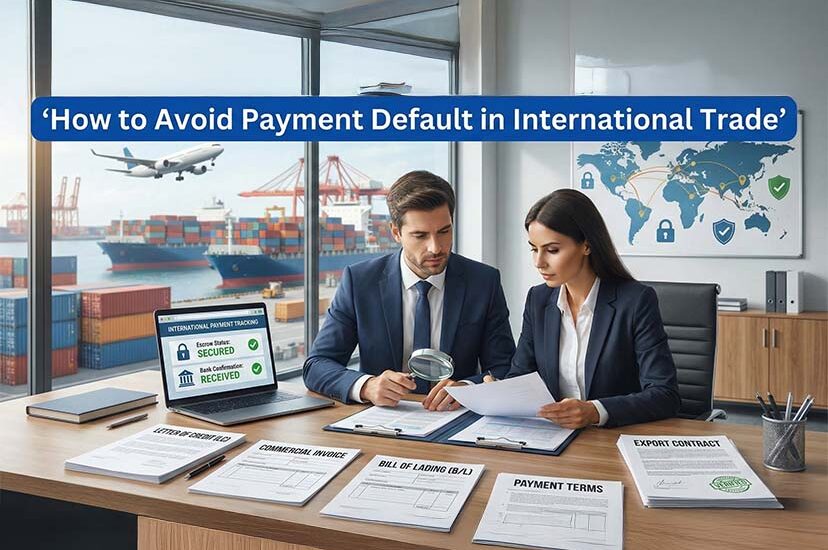
International trade provides exporters with exposure to global markets, increased volumes of orders, and revenue diversification. However, it is also rather risky for businesses, as it exposes them to the significant risk of late payments or non-payment altogether from overseas buyers. Understanding the strategy of preventing payment default in international trade is something that exporters who want to expand sustainably in the market should know how to handle their cash flow.
Exporters need to take proactive measures in dealing with payment risks, whether through buyer analysis or structuring payment and financing instruments. This guide elaborates on the best ideas on how exposure can be minimized in order to have predictable collections.
Understanding International Trade Payment Risk
Each export operation involves a risk of international trade payment, particularly when exporting goods internationally before payment is actually made. Legal variations, currency variations, political insecurity and the creditworthiness of buyers can all influence the payment.
The exporters are likely to export on open account terms so as to be competitive, hence exposing them to defaults. In the absence of adequate protection, an unpaid invoice may ruin the working capital and future deliveries. These risks take into consideration the protection mechanisms that can be put in place by exporters through recognition of such risks at an earlier stage.
Common Causes of Payment Default in Exports
There are a few cases when the default of payment happens suddenly. Bad contracts, inadequate verification of buyers, and over-reliance on the relationship of trust are usually causes of losses in exports. Payments could also be delayed by poor documentation or disagreement on the quality of products and delivery schedules.
Lack of evaluation of the credibility of buyers escalates the problem of preventing default in payment of the exports. Most of the exporters are concerned with the size of the orders and the potential of the market, whereas they overlook the financial stability and the payment history. These gaps are important to address to mitigate the risk of default.
Buyer Payment Risk Assessment Before Shipping
Valid buyer payment risk assessment is the premise of secure foreign trade. The exporters need to assess the financial capacity, trade record and reputation of the buyer in the market before they ship them.
This involves scrutiny of credit reports, reference checks, performance of previous payments and business authentication. Learning to check the overseas buyers minimizes uncertainty and helps the exporters to determine the suitable payment conditions. Good buyer evaluation reduces unexpectedness and establishes bargaining.
Using Secure Payment Methods in International Trade
Choosing secure payment methods in international trade reduces the risks associated with defaults to a large extent. Letters of Credit (LCs), advance payments and documentary collections are some of the instruments that provide protective levels to differing extents.
Although advance payments would give optimum security, it is not always commercially viable. Letters of Credit normalize risk and competitiveness, but have to be used with strict documentation rules. The exporters also need to match the modes of payment and the buyer risk profile to retain the security and sales momentum.
Trade Credit Risk Management Strategies
Good management of trade credit risk entails establishing clear and internal policies about credit limits, payment schedule and escalation policies. Exporters are expected to set the acceptable risk levels according to the type of buyers and the market dynamics.
Systemic risk is mitigated by diversification of the buyer portfolio, not having a focus on one particular market, and constant monitoring of receivables. Consideration of the pending invoices frequently will help to identify possible delays in making payments on time.
Management of trade credit risk is a continuous process and not a one-time event.
Role of Export Factoring in Payment Risk Mitigation
Export Factoring is considered to be one of the most efficient methods of mitigating export payment risks, particularly in open-account trade. Exporters will be able to obtain quick access to liquidity and shift payment risk when they sell their export receivables to a factoring partner.
Factoring providers determine the creditworthiness of buyers, collect and in most cases provide non-recourse facilities, which cushion exporters against buyer default. This enables exporters to concentrate on production and sales and not on the quest to get payments.
Factoring also ensures the stability of cash flow as well as protection against risks to businesses going to scale in new markets.
Preventing Non-Payment Through Strong Documentation
Preventing non-payment in exports is impossible without clear contracts and correct documentation. Invoices, shipping documents and contracts should be in perfect agreement with those agreed upon by exporters.
Delivery conditions, pricing or specifications may create ambiguities that may result in disagreements and delayed payments. Consistent documentation enhances the legal position and facilitates quicker conflict resolution in the event of a complication.
Transactions that are well documented are easier to finance, insure, and enforce.
Export Payment Risk Mitigation Through Insurance
Trade credit insurance is yet another level of mitigation of the export payment risk that includes the losses that arise when the buyer goes insolvent or because of political risks. Even though insurance is not the solution to risk, it is a guarantee of financial protection and improved confidence in credit extension.
Finance of insured receivables is also more appealing to enhance access to working capital. The exporters need to consider cost-insurance versus exposure levels to ascertain appropriateness.
Reducing Payment Risk in Exports Through Monitoring
Continuous monitoring is also critical in minimizing payment risks in exports. Exporters are supposed to monitor buyer payment patterns, check the market situation and alter credit terms when required.
Early indicators like slow communication, incomplete payments, or frequent conflicts have to be addressed urgently. Such minor problems can be negated by proactive follow-ups and re-negotiation of terms to avoid defaulting.
International Trade Payment Protection as a Growth Enabler
A proper protection of international trade payments is more than just a loss aversion; it is the ability to grow confidently. Strong risk control exporters will be able to venture into new markets, be able to provide competitive credit terms, and expand operations without affecting cash flow.
Through the integration of buyer evaluation, safe payment systems, and financing provisions, exporters develop a robust trade system that enhances long-term development.
FAQs
Q1: What is the biggest cause of payment default in international trade?
Inadequate buyer assessment with insecure payment terms is the most prevalent cause of non-payment in exports.
Q2: What is the purpose of the export factoring in decreasing the payment risk?
Export factoring shifts collection risk and, in most instances, buyer default risk to the factoring supplier and gives the business instant cash flow.
Q3: Do secure payment procedures suffice to ward off defaults?
Although secure forms of payment are quite safe, they should be used in conjunction with risk evaluation of the buyer, documentation discipline, and financing instruments that have a greater ability to protect the purchaser.