
- March 23, 2026
- Posted by: Rishabh Agrawal
- Categories: Import Factoring, Blog
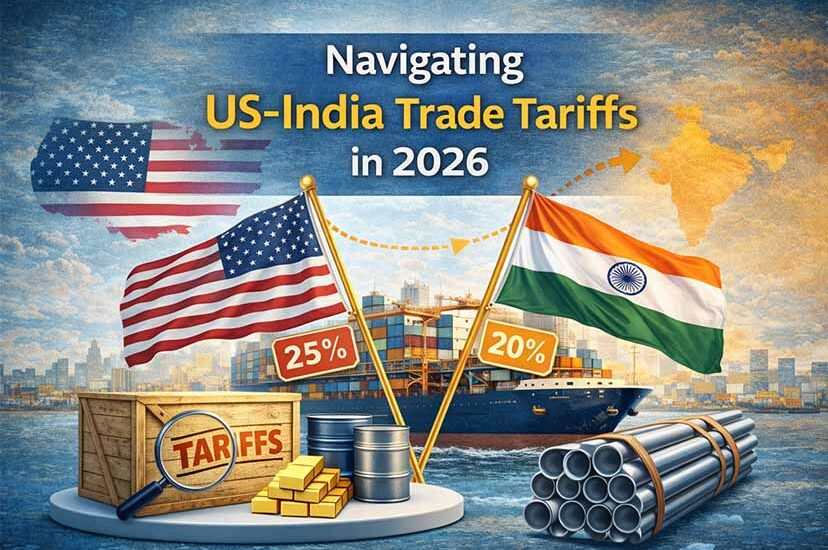
The global trade between the United States and India in 2026 continues to evolve based on tariff modifications, geopolitical interests, and the internal industrial policies of the countries. To importers, the changes directly affect the landed cost, the pricing strategy, and profitability.
It is essential to know the US-India trade tariffs in 2026 for those businesses that are dependent on cross-border sourcing. Without proper planning, shifting duty structures may erode margins and disrupt the supply chain stability.
Understanding the US-India Trade Tariffs Landscape
US India trade tariffs refer to customs duties and trade measures imposed on goods traded between the two countries. These tariffs affect the prices and sourcing of products as well as bilateral trade flows. The importer margins and competition can be greatly influenced by changes in import duty structures, retaliatory tariffs, or levies imposed on certain sectors.
The US trades with India in electronics, pharmaceuticals, textiles, chemicals, agricultural commodities and machinery. In 2026, the considerations of tariffs are affected by:
- Ongoing trade negotiations
- Major strategic technology controls
- Domestic incentives in manufacturing
- Policies of supply chain diversification
Some product lines face higher customs duties exposure, particularly where the local industries are under defence or where there are imbalances in the trade.
To avoid cost surprises, importers need to be aware of the tariff notifications, classification changes and announcements of trade policies.
Key Sectors Impacted by Tariff Changes
Electronics and Technology Components
Sensitive categories are semiconductors, telecom equipment, and electronic assemblies. When tariffs are changed or export control is imposed, sourcing and shipments become expensive and slow.
Companies that will import or export goods between the US and India or vice versa need to determine the accuracy of HS code classification to avoid paying the wrong duties.
- Steel and Aluminum Products
Anti-dumping or safeguard measures are often levied on metals. Any changes in tariff rates can drastically increase the landed cost in the infrastructure and manufacturing industries. It is imperative to monitor trade remedy measures as part of margin planning.
- Agricultural and Food Products
Agricultural goods often become subject to retaliatory tariffs during trade negotiations. In this segment, the importers need to consider the volatility of the policies when structuring pricing contracts.
- Pharmaceuticals and Chemicals
The phenomena of regulatory alignment, intellectual property policies, and duty structures impact the pricing in the pharmaceutical supply chain. Although many pharma products will enjoy the reduced tariffs, intermediates and specialty chemicals can receive variable duties.
How Tariffs Directly Impact Import Margins
Tariffs not only affect the outlay of duties. They affect:
- Landed cost calculations
- Inventory carrying costs
- Pricing strategy
- Cash flow cycles
- Domestic market competitiveness
Even a minimal rise in the import tariffs will squeeze out the profit margins, provided that the adjustments of prices are postponed or the contract fixed.
The importers need to consider the tariff risk as a variable in financial planning and not a formality of compliance.
Strategies to Protect Your Import Margins in 2026
- Optimize HS Code Classification
Wrong classification may result in overpayment of duty or compliance fines. Carry out regular classification audits to guarantee that they conform to the new tariff schedules and bilateral trade agreements.
Accurate HS classification management reduces unnecessary cost exposure.
- Evaluate Alternative Sourcing Routes
The overreliance on high tariff jurisdictions can be mitigated by diversification of the suppliers in different regions. A cost-benefit analysis should be performed by businesses in terms of duty rates, cost of logistics, and reliability. Strategic sourcing helps in protecting the margin in volatile trade.
- Leverage Trade Agreements and Concessions
Where possible, preferential duty advantages or exemptions under the relevant trade structures should be used by importers. To be able to claim preferential tariff treatment, it is important to document it carefully and verify its origin.
- Renegotiate Supplier Contracts
Long-term contracts should include tariff adjustment clauses. The spread of tariff risk between the buyer and supplier protects against the fluctuation of margins when the policy changes.
- Strengthen Pricing Strategy
Dynamic pricing models enable companies to react quickly to tariff changes. Duty differentials should be incorporated into the ERP systems and costing tools by importers. Proactive landed cost optimization protects profitability.
Risk Management Through Financial Planning
The changes in tariffs may raise the initial payments to customs and the working capital cycles. Any business that is sensitive to the US-India trade routes should organize to have liquidity reserves. Financial pressure may be increased by the changes in the foreign exchange rates and tariffs. Structured financial forecasting becomes important in managing cross-border trade risk.
Building Resilience in a Changing Trade Environment
In 2026, the US-India trade tariffs are indicative of the wider change to strategic trade management and sector-specific protection. Importers who are keen to follow the policy changes, better sourcing policies, and reinforce financial planning will be competitive.
Protecting import margins is no longer reactive. It involves rigorous compliance management, flexible cost modeling and robust liquidity management. Companies that consider tariff strategy to be part of their business processes will be able to navigate uncertainty.
Frequently Asked Questions
Q1: What is the impact of US-India trade tariffs on the import margins?
Landing cost is raised by tariffs and may decrease profitability if pricing policies are not adjusted. They also affect the cash flow since there are increased upfront payments on the duty.
Q2: What are the most volatile sectors as far as tariffs are concerned?
Frequent duty revisions or trade remedy measures are taken on electronics, metals, agricultural products, and some chemicals.
Q3: How do businesses mitigate risk caused by tariffs?
Proper HS classification, supplier diversification, utilization of trade concessions, and good financial planning contribute to limiting exposure to tariff-induced cost rise.
