
- July 9, 2026
- Posted by: Rishabh Agrawal
- Categories: Channel Financing, Blog
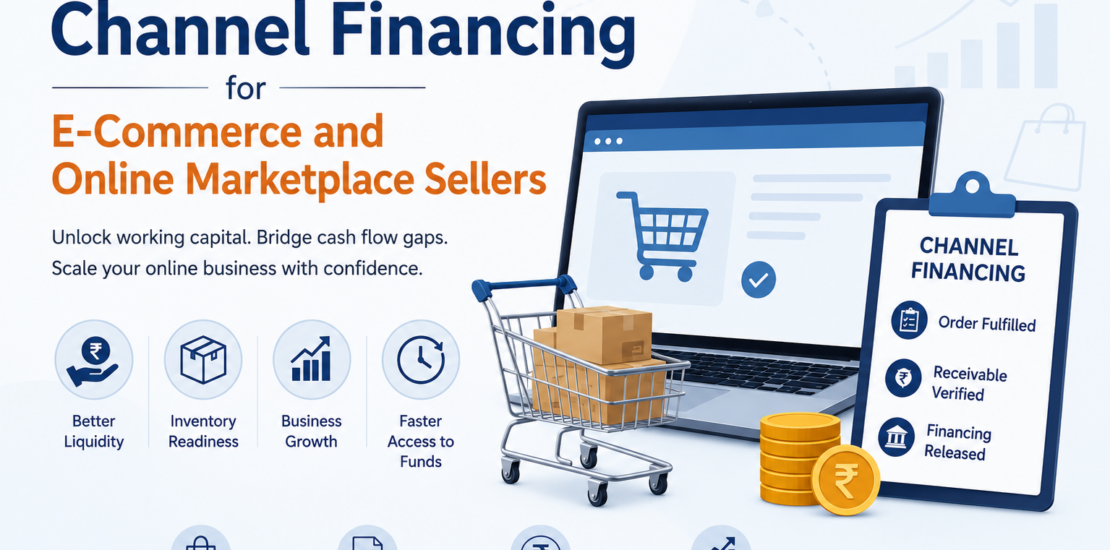
The e-commerce sector in India has opened up new avenues for businesses of every scale. Even small manufacturers, D2C brands and large distributors are now able to reach customers across the country and beyond with the help of online marketplaces. But with rapid sales growth, there is a potential problem: capital is trapped between the inventory purchase, order fulfilment and the marketplace payment cycles. Without sufficient working capital for online sellers, businesses may struggle to keep pace with customer demand despite having healthy sales.
The situation becomes even more intense during holiday seasons, promotions and flash sales, as sellers have to invest money into stock and wait for payments from the marketplaces. Concurrently dealing with procurement, packaging, shipping, and returns demands consistent liquidity. Channel financing can be useful to businesses to bridge cash flow gaps, ensuring they have the financial flexibility to maintain operations and continue expanding without disrupting their growth plans.
What is Channel Financing?
Channel finance is a financing solution that can be used for a short period of time. It allows businesses to access working capital through the confirmation of business deals or receivables. It facilitates suppliers and online sellers to enhance their liquidity and process orders quickly with no need to wait for payments from the marketplace or customers.
How Channel Financing Works for E-Commerce Businesses
Channel financing follows a simple process that improves liquidity while allowing businesses to continue operating under existing commercial arrangements.
- Order Is Placed and Fulfilled
The seller gets an order from an online marketplace or distribution partner, then fulfills it and delivers it to the marketplace as per its instructions. Each successful transaction adds to better digital trade finance opportunities through verified business activity.
- Sales Are Verified
Upon successful delivery of the goods to the marketplace and confirmation of the transaction, the receivable becomes eligible for financing. This verification helps to minimize risks and also helps fund access faster via channel financing solutions.
- Financing Is Released
The financing partner provides financing based on verified receivables, rather than on the settlement cycle of the marketplace. Working capital finance allows businesses to reinvest this money to buy stock, manage operations, or fulfil additional customer orders.
- Marketplace Completes Payment
The marketplace continues following its normal payment schedule. Once the payment is released, the financing arrangement is closed, and the sellers can continue to have good liquidity without altering the payment scheme.
Which E-Commerce Businesses Benefit the Most?
- Marketplace Sellers
An issue that many e-commerce companies, especially those that have online platforms like Amazon, Flipkart, and Myntra, face is that of slow settlements, even with regular order volumes. Having access to marketplace financing allows sellers to keep inventory on hand and engage in promotions without forcing their customers to wait for their order to arrive and disrupting their cash flow.
- Direct-to-Consumer Brands
The D2C brands that grow quickly tend to allocate a significant amount of their resources into product innovation, digital marketing, warehouse, and customer acquisition. By having reliable e-commerce working capital, these businesses can expand their operations, introduce new product lines and handle growing demand without slowing business expansion.
- Wholesalers and Distributors
Distributors supplying products to various online retailers and marketplaces will need to control inventory for multiple sales channels. Inventory financing allows them to quickly restock their inventories, minimize supply disruptions, and enhance order fulfilment in expanding distribution channels.
- High-Growth SMEs
SMEs often have orders that grow quickly, but they don’t have the traditional business credit to support them. SME financing through channel finance also gives quick liquidity, enabling SMEs to expand production capacity, boost customer service and take advantage of new market opportunities without overloading finances.
Key Advantages of Channel Financing
Channel financing is not simply another choice of funding, but it enhances various elements of an online business and improves the efficiency of the financial process throughout the sales lifecycle.
| Business Advantage | How It Helps Online Sellers |
| Better Liquidity | Locks up pending receivables into cash to ensure seamless business operations. |
| Inventory Readiness | Allows vendors to fill inventory rapidly, particularly before seasonal or promotional sales. |
| Improved Supplier Payments | Companies can pay suppliers promptly, thus building durable relationships with suppliers. |
| Business Scalability | Facilitates market expansion into new markets, product lines and target audiences. |
| Reduced Funding Pressure | Reduces reliance on short-term and high-interest loans for daily activities. |
When Should an Online Seller Consider Channel Financing?
All businesses eventually reach a point where growth begins to outpace available cash flow. These situations can be avoided by identifying them early and preventing disruptions in operations and lost opportunities.
You should take into consideration your working capital if:
- Frequently experiences delayed marketplace settlements.
- Needs more stock for holiday or seasonal sales.
- Struggles to fulfil increasing order volumes due to limited liquidity.
- Wants to expand into additional marketplaces or regions.
- Access to funds in less time, and not only from traditional lenders.
By linking financing to business transactions, rather than the predetermined borrowing limit, companies have more flexibility in adapting to the market’s needs.
Powering the Next Phase of E-Commerce Growth
E-commerce is not just about attracting customers. It is about having the funds to meet the demand. A healthy liquidity balance enables businesses to invest in their inventory and rapidly capitalize on market opportunities.
Online sellers can leverage e-commerce financing and modern channel financing to mitigate delays in payment and create a business that thrives and is well-positioned for sustainable growth in an ever-more competitive digital landscape.
How Credlix Strengthens Agricultural Supply Chains
Growing businesses need financing that keeps pace with their sales. Credlix provides technology-powered channel financing options that enable online sellers, distributors and suppliers to unlock working capital without the delay of extended payment periods. With Credlix’s approved receivables financing, companies can manage expansion, cover customer orders and keep inventory without worrying about financing.
Credlix has a digital-first platform that streamlines the financing process with quicker approvals, clear workflows, and flexible financing solutions for today’s supply chains. Whether a business is focused on scaling into many marketplaces or on handling seasonal demand, it can fill cash flow deficits by offering support for the long term.
FAQs
What is channel financing in e-commerce?
Channel financing is a working capital solution that allows an online seller to access funds for their products in advance of marketplace payments. This enables businesses to keep stock levels, meet customer orders, plan for various business expenses and continue to expand without waiting for usual payment terms, thereby ensuring smooth cash flow and uninterrupted business operations.
What type of businesses require channel financing?
Marketplace seller financing can be beneficial to marketplace sellers, D2C brands, wholesalers, distributors, manufacturers, and growing SMEs. More financial flexibility can help businesses receive payments on time, offer better credit terms for customers, make more efficient purchases, fill larger orders, and contribute to business growth. These ways can help businesses grow better and improve sales.
How is channel financing different from inventory financing?
Although both solutions improve business liquidity, they serve different purposes. Channel financing provides funds against verified receivables or business transactions, while inventory financing is secured against unsold stock. Businesses often choose channel financing when they need faster access to working capital after completing sales rather than before selling inventory.
