
- June 29, 2026
- Posted by: Rishabh Agrawal
- Categories: Export Financing, Blog
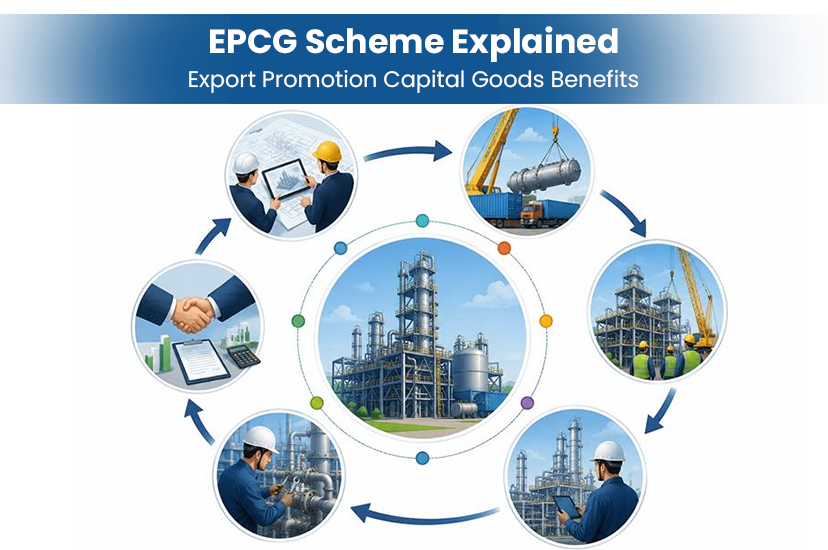
Indian exporters operate in a highly competitive international market where productivity and technology are the key factors for success. Companies often have to invest in advanced machinery and production technologies to enhance output quality and stay competitive. The Export Promotion Capital Goods Scheme was implemented to encourage enterprises that operate on exports to modernize their operations. The EPCG Scheme remains one of the most crucial policy measures aimed at boosting investment in productive assets and strengthening the export ecosystem of India.
For many businesses, the cost of importing modern equipment can be a significant barrier to expansion. Through provisions related to capital goods import, the scheme helps reduce the financial burden of acquiring machinery and technology required for export production. As one of the most widely used export incentives for exporters, EPCG supports business growth by improving access to equipment. The scheme also offers benefits linked to customs duty exemption, subject to applicable conditions and export commitments.
What is the EPCG Scheme?
The Export Promotion Capital Goods Scheme is a government initiative that allows eligible exporters to import capital goods at concessional or zero customs duty, subject to specified export obligations. The EPCG Scheme is intended to encourage investment in technology, production capacity, and export-oriented business growth.
Why the EPCG Scheme Was Introduced?
Global markets are highly dynamic, and exporters are required to improve productivity, quality standards and operational efficiency. Outdated machinery poses problems in maintaining export competitiveness, especially when competing manufacturing companies are using modern machines. In response to these issues, policy steps were taken to facilitate technology upgradation and promote investment in modern equipment by exporters.
The broader objective was to support exports and strengthen manufacturing capabilities in India. The scheme facilitates capital investment for exporters by lowering the cost of machinery import and also improving their manufacturing efficiency. This capability allows businesses to scale up their production and meet the demands of the international markets.
How The EPCG Scheme Works?
The EPCG Scheme is designed to help exporters access capital equipment at lower import costs while committing to future export performance.
- Import of Capital Goods
Under the scheme, eligible businesses can undertake capital goods imports, including machinery, equipment, production systems, and other assets required for manufacturing goods or providing export-related services. These imports are intended to support productivity enhancement and operational modernization.
- Duty Benefits
One of the biggest benefits of the scheme is that it allows for customs duty exemption or concessional duties on eligible imports. Exporters can invest more in increasing their capacity and improving operations to reduce the cost of acquiring productive assets.
- Export Obligation
In exchange for these benefits, businesses are required to fulfil an export obligation under EPCG within a specified period. The obligation is generally linked to the value of duty saved through the scheme and is intended to confirm that the imported assets contribute to export growth.
- Compliance Requirements
All business activities need to comply with relevant reporting, documentation, and regulatory processes during the scheme term. To ensure a successful EPCG compliance, there are specific requirements to take into account, such as timely submission of applications, avoiding unnecessary delays, and ensuring that the necessary conditions for the scheme are met.
Who Can Benefit From The EPCG Scheme?
The scheme is used across multiple export-oriented industries that require ongoing investment in machinery, equipment, and production capabilities.
- Manufacturers
The EPCG Scheme is being used by many manufacturing exporters to modernize their facilities, enhance production efficiency and capacity. Evolving international quality standards and expectations are often met by access to advanced equipment.
- Engineering Companies
The scheme is widely relevant to businesses involved in engineering exports, as production often depends on sophisticated machinery and technology-intensive manufacturing processes.
- Textile And Apparel Businesses
In the textile export sector, machinery costs that are continually invested can be beneficial for both increased productivity and better product quality, thereby contributing to competitiveness in the international markets. Businesses make such investments more efficiently with EPCG benefits.
- Service Exporters
The scheme is not limited to manufacturing activities. Eligible service exporters under EPCG may also benefit from importing capital equipment required to enhance service delivery capabilities and support export-oriented operations.
Key Benefits Of The EPCG Scheme
In addition to duty savings, the scheme can help to improve the competitiveness and efficiency of operations.
- Reduced Capital Costs
One of the biggest advantages of capital goods imports is the decrease in the initial costs of equipment. Reducing investment barriers can enable businesses to make investments that may be deferred due to financial limitations.
- Technology Modernization
The scheme acts as a technology upgradation scheme and promotes businesses to install new production technologies. Modernization of machinery can help to boost efficiency, quality of the produced goods, and performance of the production process itself.
- Improved Export Capacity
Improved production capacity can stimulate new export growth opportunities through the possibilities of growing production, broadening product lines and adapting to export demand.
- Better Global Competitiveness
Access to advanced technology and efficient production systems can strengthen international market competitiveness by helping exporters improve quality and meet evolving buyer requirements.
What Exporters Should Evaluate Before Applying
Although the EPCG Scheme provides significant advantages, companies need to thoroughly evaluate their eligibility prior to the application process.
- Export Commitments
Businesses must understand the requirements associated with the export obligation under EPCG. Since benefits are linked to future export performance, realistic planning is important before undertaking commitments.
- Investment Requirements
Careful capital investment is important for the successful use of the scheme. Before launching the process, exporters need to consider equipment needs, return on investment and future business goals.
- Compliance Readiness
Documentation and compliance with regulatory requirements are crucial aspects of EPCG compliance. Businesses need to have suitable systems and processes to manage the ongoing obligations.
- Long-Term Business Goals
The scheme is generally most beneficial when aligned with a broader export expansion strategy. Companies should consider how imported equipment supports future growth plans and international market objectives.
- Documentation Requirements
To implement the EPCG application process, it is essential to understand this process. Having accurate record-keeping, timely submissions, and regulatory compliance can minimize delays and administrative issues.
EPCG And Long-Term Export Competitiveness
The largest EPCG Scheme advantages frequently surpass the instant duty savings. The scheme promotes investment in productive assets, thereby strengthening businesses’ operating foundations and laying the groundwork for long-term growth and efficiency improvements. The use of modern equipment can help increase productivity and ensure the quality of products of exportable industries.
Continued technology and infrastructure investment has the potential to make a major contribution to export competitiveness in the long run. Companies that invest in technology upgrades are likely to be more competitive to satisfy changing international requirements, more flexible in adapting to market changes, and more relevant in the increasingly competitive international business landscape.
Building Export Capacity Through Smarter Capital Investment
The Export Promotion Capital Goods Scheme continues to be an important policy tool to promote investment in technology, productivity and export-oriented growth. The scheme lowers the barriers to the acquisition of equipment; supports businesses to improve production capacity; and contributes to businesses’ long-term competitiveness.
For exporters who want to modernize their operations, strategic capital goods import decisions can be vital for future success. Voluntary investments can contribute to building business foundations for sustainable growth in export markets when combined with the proper use of export incentives available to exporters.
Turning New Production Capacity Into Export Revenue With Credlix
The purchase of machinery and production capacity may only be a component of a larger growth plan. Businesses undertaking expansion often need to have liquidity to handle customer promises, operations, inventory and procurement in the transition. With technology-enabled trade finance solutions, Credlix assists exporters in averting and minimizing cash flow bottlenecks and boosting liquidity. This helps businesses in increasing exports and continuing operations without compromising on financial flexibility, and while also taking up opportunities for modernization and expansion.
FAQs
What is the EPCG Scheme?
The Export Promotion Capital Goods (EPCG) scheme is one of the Foreign Trade Policy initiatives under the DGFT. It allows imports of capital goods, including machinery, equipment, and related spares, duty-free or at concessional rates by eligible manufacturer exporters, merchant exporters, and service providers, subject to an agreed export commitment within a designated time period.
What are the benefits of the Export Promotion Capital Goods Scheme?
EPCG reduces the upfront cost of importing machinery by waiving or lowering customs duties, helping companies save working capital. This helps upgrade technology, increase production capacity, and improve product quality. Over time, these gains enable exporters to meet global standards and thus to compete more effectively in international markets.
Who is eligible to avail the EPCG benefit?
Manufacturer exporters (with or without a supporting manufacturer), merchant exporters attached to a supporting manufacturer, and eligible service providers earning foreign exchange can apply. The applicant must have an Import-Export Code (IEC) and must be prepared to commit to an export obligation generally six times the duty saved, within six years
