
- August 20, 2026
- Posted by: Rishabh Agrawal
- Categories: Import Factoring, Blog
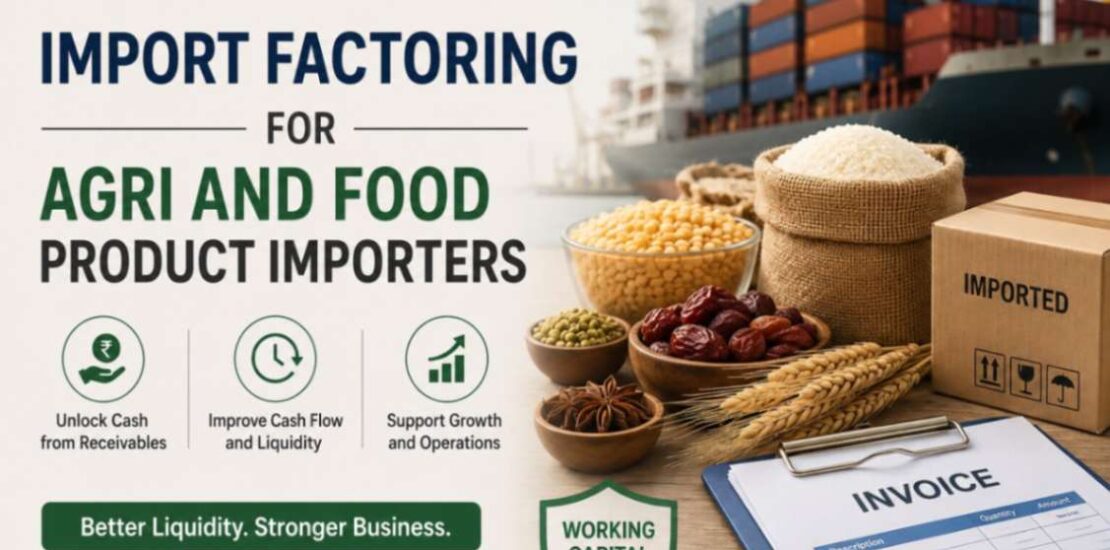
Importing agricultural and food products involves substantial upfront costs. Businesses may need to pay overseas suppliers before goods reach India, while additional expenses arise from freight, customs, storage, insurance, and domestic distribution. These payment cycles can place pressure on import working capital, particularly when importers sell products to customers on credit.
Import factoring can be relevant when eligible businesses need liquidity against qualifying receivables generated after selling imported goods. Instead of waiting for customers to pay their invoices, an importer may use receivables-based financing to access funds earlier and manage its operating cycle more efficiently.
For agri and food businesses, this distinction is important. Import factoring does not finance the import transaction itself in every structure. Its primary purpose is to provide financing against eligible receivables, subject to the financier’s assessment and applicable terms.
What Is Import Factoring?
Import factoring is a receivables financing arrangement that can help an importer access funds against eligible invoices raised to its customers. Once imported goods are sold and qualifying receivables are created, the business may be able to obtain financing before those invoices reach their due dates.
The exact structure varies by financier and transaction. Factors may assess the importer, its customers, underlying invoices, payment history, and other relevant risks before providing financing.
For an importer, the potential benefit is improved liquidity between making payments associated with procurement and receiving money from customers.
Read: Import Finance, Meaning, Working, and Benefits
Why Agriculture and Food Importers Need Working Capital
Agricultural and food products can involve recurring procurement cycles and significant inventory requirements. Importers may need to purchase products in advance while customer payments arrive later.
This can create an import financing requirement across several stages of the business cycle.
Common expenses can include:
- Overseas supplier payments
- Freight and transportation
- Customs-related costs
- Warehousing
- Insurance
- Packaging
- Domestic transportation
- Distributor or retailer credit
The timing of these payments matters because cash can remain tied up in inventory until the products are sold and customer invoices are collected.
How Import Factoring Can Support Food Importers
The primary benefit of food import financing through receivables-based structures is improved liquidity after eligible sales are made.
Consider a food importer that purchases packaged products from an overseas supplier. The importer receives the goods, distributes them to retailers, and raises invoices with 30- or 60-day payment terms.
The importer may have already incurred significant procurement and logistics expenses. If eligible receivables can be financed, the business may access funds earlier instead of waiting for the full customer payment cycle.
This can help the importer maintain liquidity for subsequent procurement and operating expenses.
Import Factoring vs Import Finance
Import factoring and finance should not be treated as interchangeable. Import finance generally refers to financing used to support the import transaction, such as funding supplier payments or other eligible import-related requirements.
Import factoring, by contrast, generally focuses on eligible receivables created after goods or services have been sold to customers.
| Factor | Import Finance | Import Factoring |
| Primary purpose | Fund import-related requirements | Finance eligible receivables |
| Timing | Often linked to procurement or import cycle | Generally after eligible sales create receivables |
| Underlying transaction | Import purchase | Customer invoice |
| Main consideration | Importer and transaction | Receivable, customer and transaction |
| Liquidity benefit | Supports procurement | Accelerates access to receivable proceeds |
The appropriate solution depends on where the business experiences its funding gap.
Which Agri and Food Businesses Can Consider Import Factoring?
The suitability of agri business financing depends on the business profile, transaction structure, receivables, customer quality, documentation, and financier’s eligibility criteria.
Potential users can include businesses importing:
- Fruits and vegetables
- Grains and cereals
- Pulses
- Spices
- Edible ingredients
- Packaged foods
- Processed food products
- Dairy-related products
- Beverages
- Food processing inputs
What Factors Influence Import Factoring Eligibility?
Businesses considering receivables financing for importers should understand that eligibility depends on more than annual turnover.
- Customer Creditworthiness
The quality and payment history of the customers purchasing the imported products can influence the assessment.
- Invoice Quality
Invoices should represent genuine commercial transactions and contain accurate information. Supporting purchase orders, delivery records, and other documents may also be relevant.
- Payment Terms
The period between invoicing and expected customer payment can influence the financing requirement.
- Business Track Record
The financier may evaluate the business’s operating history, financial position, banking conduct, and transaction history.
- Product and Transaction Characteristics
The nature of the imported goods, transaction structure, supply chain, and associated risks can also influence financing decisions.
Documents Importers May Need
The exact factoring documentation depends on the financier and transaction. Businesses may commonly need documents relating to the company, customers, invoices, and underlying transactions.
These may include:
- Business registration documents
- KYC documents
- Financial statements
- Bank statements
- Customer invoices
- Purchase orders
- Delivery documents
- Customer contracts
- Import documentation
- Tax-related records
- Receivables ageing information
How Import Factoring Can Improve Cash Flow
One of the key benefits of cash flow financing is reducing the waiting period between invoicing customers and receiving payment.
Suppose an importer sells products worth ₹50 lakh to a distributor with 60-day payment terms. The importer may need to continue purchasing inventory during those 60 days.
If the receivable is eligible for factoring, financing against that receivable may provide earlier access to part of the expected proceeds. This can help the importer fund subsequent purchases and manage operating expenses.
What Importers Should Consider Before Choosing Factoring
Businesses should assess the complete financing arrangement before proceeding with import factoring services.
Important considerations include:
- Financing amount
- Applicable financing charges
- Customer payment terms
- Recourse structure
- Documentation requirements
- Eligible invoices
- Repayment mechanism
- Customer notification requirements
- Processing timelines
- Overall cost of financing
Importers should also understand whether the arrangement is with or without recourse and what happens if an underlying customer fails to make payment.
Import Factoring Does Not Replace Import Compliance
Financing and import compliance are separate considerations. Import factoring does not remove the importer’s responsibility to comply with applicable customs, tax, foreign exchange, food safety, labelling, licensing, and other regulatory requirements.
Agriculture and food importers should continue maintaining appropriate import documentation and complying with requirements applicable to their specific products.
The financing provider’s assessment also does not change for legal or regulatory compliance by the importer.
Credlix: Supporting Importers With Working Capital
Importers need liquidity throughout the procurement, inventory, sales, and collection cycle. Credlix provides digital financing solutions designed to help eligible businesses manage working capital financing requirements and improve cash-flow flexibility.
For businesses selling imported products on credit, suitable receivables financing can help bridge the gap between customer invoicing and payment collection. This can support recurring procurement and operating requirements without requiring the business to wait for every eligible receivable to mature.
The availability and suitability of financing depend on the business profile, transaction structure, receivables, documentation, and applicable eligibility criteria.
FAQs
What is Import Factoring for food importers?
Import Factoring is a receivables-based financing arrangement that can help eligible food importers access funds against qualifying customer invoices before their due dates. It can help manage liquidity after imported goods have been sold and receivables have been created. The exact financing structure, eligibility requirements, charges, and documentation depend on the financing provider.
Is import factoring the same as import finance?
No. Import finance generally refers to funding associated with the import or procurement cycle, while import factoring generally involves financing eligible receivables generated after sales. The two solutions address different points in the cash-flow cycle. An importer should identify whether its primary requirement involves supplier payments or financing customer receivables.
Can agricultural businesses use factoring for working capital?
Eligible agricultural businesses may be able to use agri business financing against qualifying receivables, depending on the financing provider’s criteria. The assessment can consider the business, its customers, invoices, transaction history, documentation, and payment terms. Operating in the agricultural sector alone does not guarantee eligibility for factoring or any specific financing facility.
