
- October 9, 2026
- Posted by: Rishabh Agrawal
- Categories: Invoice discounting, Blog
Freight and logistics businesses often complete deliveries well before customers settle their invoices. During this waiting period, they will still have other running costs to pay, such as fuel, driver wages, maintenance, fleet costs and more. This results in a working capital deficit that may be more difficult to maintain as volumes of freight grow.
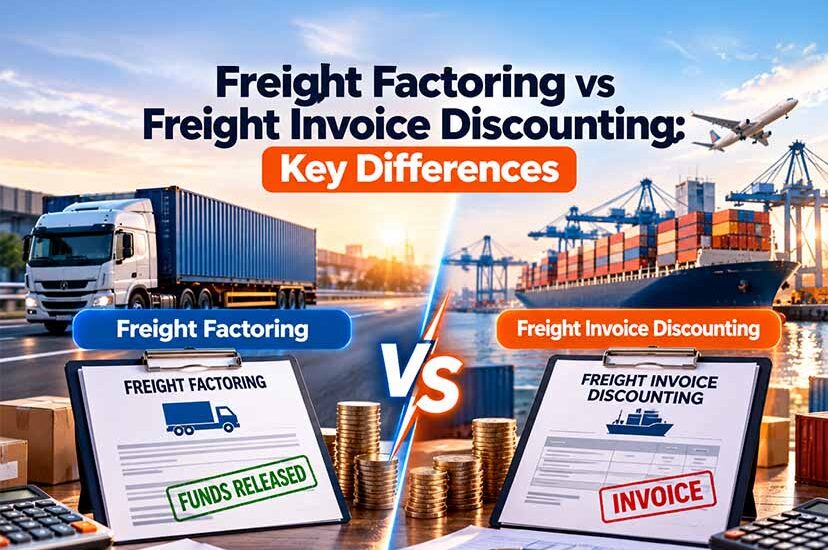
Freight factoring and freight invoice discounting are two different options for businesses to get access to funds related to unpaid freight invoices. The main differences involve who controls the receivables and who manages receivables. The manner in which customer relations are handled and how financing costs are scheduled is also considered. Recognizing these variations can assist logistics companies in picking the funding design that works best for them.
What is Freight Factoring?
Freight factoring is a financing option that lets a business sell qualified unpaid freight invoices to a factoring company for an advance. The provider usually takes payment from the customer and pays out the balance after deducting any fees.
What is Freight Invoice Discounting?
Freight invoice discounting provides financing against eligible unpaid freight invoices while the business generally retains greater control over its receivables and customer collections. The financier provides a cash advance to the company against eligible invoices at agreed financing terms.
Freight Factoring vs Freight Invoice Discounting
Although both can provide freight invoice financing, their structures can differ significantly.
| Factor | Freight Factoring | Freight Invoice Discounting |
| Receivable structure | Receivables are generally assigned or sold to the factor | Receivables are generally used to support financing |
| Collections | Factor typically manages customer collections | Business generally retains collection responsibility |
| Customer interaction | Financing arrangement may be disclosed to the customer | May allow greater continuity in customer interactions |
| Administrative support | May include collection and receivables-management services | Business usually manages its own receivables processes |
| Credit assessment | Customer creditworthiness is an important consideration | Customer receivables and the business’s financial controls may both be assessed |
| Business control | Lower administrative control over collections | Greater control over customer payment management |
The precise legal and commercial structure will differ based on provider and agreement. The important distinction is whether the financing arrangement primarily involves transferring receivables to a factor or borrowing against receivables while retaining greater operational control.
Read: Invoice Factoring, Meaning, Working, and Benefits
How Freight Factoring Works
Freight factoring usually starts when a logistics company finishes a service and submits an invoice to the factor for financing. The business submits the invoice and supporting documentation for review. If approved, the factor provides the logistics company with an agreed-upon advance.
The customer subsequently pays according to the agreed payment terms, generally to the factoring provider. After receiving payment, the provider releases the remaining balance after deducting the agreed factoring fees and applicable charges.
Freight companies can use this structure to shift some of the administrative burden related to collection. The extent of collection support and credit-risk protection depends on the specific factoring arrangement.
How Freight Invoice Discounting Works
Freight invoice discounting is a type of financing that allows a company to obtain financing through the use of its eligible receivables prior to the customer paying. The finance provider reviews the invoices, along with details of the business and the buyer, to establish available finance.
The business will generally continue to manage its customer relationships and collections. On receipt of payment, the money received is then used to pay down the financing as per the selected structure. Consequently, invoice discounting may be appropriate for logistics companies with existing billing and collection procedures in place, where they wish to maintain greater control.
Which Option Fits Different Freight Businesses?
The choice between working capital for logistics companies through factoring or discounting depends partly on how the business manages receivables.
- Freight factoring might be more suitable in case a company needs financing but also prefers greater help with collections and receivables administration. It can be a good option for a freight business, specifically for a new or developing company that lacks larger in-house collection capabilities.
- Freight invoice discounting could be ideal for firms that have established systems and settle their own receivables and would rather keep existing customer relationships. The business may also require improved documentation and financial controls as the financing company depends on the quality of receivables and company’s processes.
The appropriate structure thus depends not just on the funding need but on how much control over operations the business wants to keep.
What Determines Freight Financing Costs?
There is no single fixed rate for freight financing, as this is unlikely to be the same across providers. They could consider the credit quality of customers, invoice age, number of payments, transaction volume, business financials, quality of documentation and type of facility.
Factors may include factoring, discount fees and any other charges that may apply to them, while invoice discounting may include financing or discount charges that relate to the amount and length of time that the money is used. Companies should compare total cost rather than headline rate.
Managing Cash Flow Across the Freight Payment Cycle
Most freight companies pay fuel, payroll, maintenance and other operational costs before their customers pay their invoices. This working capital gap can be a real financial strain for trucking and logistics businesses. Especially with extended payment cycles that take weeks or even months to close out. Eligible businesses can access the funds before the end of the full payment cycle based on outstanding receivables by using freight invoice financing. This can help logistics companies cover regular operating expenses and take in new freight orders while keeping cash flows flowing smoothly without relying on short-term borrowing.
Freight Receivables Financing With Credlix
Freight receivables financing may be an alternative for logistics companies that experience prolonged customer payment terms, enabling them to tap into funds that are stuck in unpaid invoices.
Credlix provides freight invoice discounting facilities for freight companies in road, sea and air transport. Eligible businesses can use its published offering for funding against freight invoices. This can help them transform their receivables into working capital to support their daily operations. The eligibility of the facility will depend on the type of invoice and the financing terms and conditions applicable.
Making the Right Freight Financing Choice
The decision between freight factoring and freight invoice discounting will be based on the business’s preference for enhanced liquidity and collections control, along with administrative support and financing cost.
Before deciding, businesses should consider the facility structure and how customer payments will be made. All applicable charges and whether the agreement aligns with the current receivables process should also be assessed.
FAQs
What is the key difference between freight factoring and freight invoice discounting?
The key difference in freight invoice financing is in how receivables are handled. Factoring typically involves the sale or assignment of eligible invoices to a factor. The factor then collects the receivables on behalf of the company. Invoice discounting allows the customer to enjoy much greater control of receivables and customer payments.
Is freight factoring suitable for small logistics businesses?
Freight factoring could be advantageous for smaller logistics companies that require cash flow more quickly and could use some assistance with collections. All the same, it is determined by the customer, the invoice, the history of transactions, the financial situation of the company, and the requirements of the factoring provider.
Can freight invoice discounting improve working capital?
Yes. Freight invoice discounting can help boost your working capital because an eligible logistics business can be able to access funds before customers pay for the invoices. This can be used to fill in the payment shortfall and cover ongoing costs, including fuel, labour, maintenance and other operating costs
