
- August 17, 2026
- Posted by: Rishabh Agrawal
- Categories: Machinery Loan, Working Capital, Blog
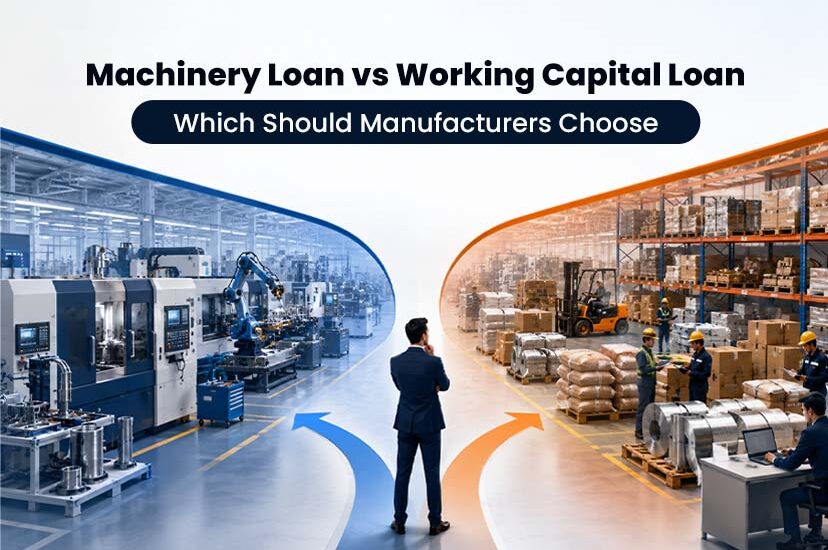
Key Takeaways
- Manufacturers often need financing for different business requirements. New equipment is necessary to expand the capacity of a production unit.
- Manufacturers may also require liquidity to pay suppliers, cover payroll and operating expenses, and fund raw materials.
- A machinery loan focuses on capital expenditure involving productive assets.
- A working capital loan is used for the operating cycle.
Choosing the right loan option can assist manufacturers in managing repayment requirements whilst maintaining compliance with business needs.
What Is a Machinery Loan?
A machinery loan is a source of finance to buy, replace, upgrade or expand machinery and equipment for a business. This funding can be used to cover production lines, processing equipment, automation systems, specialized machinery or other eligible items.
The main purpose of equipment financing is to help businesses acquire equipment without paying the full cost from their existing cash flow. The amount of financing, term, interest rate, collateral, and other requirements for the machinery to qualify for financing depend on the financing product and lender.
What Is a Working Capital Loan?
The working capital loan will be used to meet the short-term financing needs of a business. Working capital can be used for funding raw materials, inventory, supplier payments, wages, utilities, logistics, and other production costs.
Working capital financing is different from machinery financing as it is used to finance the working cycle instead of the acquisition of an asset that can be used for many years.
For instance, a manufacturer might complete production today and not receive any payment from the customer for 60 days. The company can still make material and wage payments during this time. Working capital financing can help address such timing differences when the business meets the applicable financing requirements.
Read More: Working Capital Finance Meaning, Working and Benefits
Key Differences in Machinery Loan and Working Capital Loan
| Factor | Machinery Loan | Working Capital Loan |
| Primary purpose | Purchase or upgrade machinery | Fund operating requirements |
| Typical use | Equipment and production assets | Inventory, suppliers and operating expenses |
| Funding requirement | Usually linked to capital expenditure | Usually linked to working capital needs |
| Business benefit | Production capacity or efficiency | Liquidity and operational continuity |
| Repayment approach | Depends on lender and facility | Depends on lender and facility |
| Suitable requirement | Long-term productive assets | Short-term operating needs |
Manufacturers should therefore avoid treating these facilities as interchangeable. The financing structure should correspond with the underlying business requirement.
When Should Manufacturers Choose a Machinery Loan?
A machinery loan may be appropriate when the manufacturer needs to purchase or upgrade a productive business asset.
Manufacturers may consider machinery financing when they need to:
- Purchase new production machinery.
- Replace outdated equipment.
- Upgrade existing production lines.
- Introduce automation.
- Increase manufacturing capacity.
- Improve production efficiency.
- Add equipment for a new product line.
Consider a manufacturer that has received larger customer orders. The existing production line cannot meet the required output. Purchasing additional machinery could increase capacity and help the manufacturer fulfil those orders.
In such a situation, financing the productive asset separately may provide a clearer structure than using funds intended for day-to-day operations.
When Should Manufacturers Choose a Working Capital Loan?
A Working Capital Loan may be more suitable when the primary requirement involves maintaining business liquidity.
Manufacturers commonly face working capital requirements when they need to:
- Purchase raw materials.
- Maintain inventory.
- Pay suppliers.
- Manage payroll.
- Cover utility expenses.
- Fund logistics.
- Bridge customer payment cycles.
- Meet recurring operating expenses.
For example, a manufacturer may sell products to a customer on 60-day credit terms while suppliers require payment within 30 days. The resulting timing gap can place pressure on manufacturing working capital even when the underlying sales are healthy. A suitable working capital facility can help businesses manage such gaps, subject to lender assessment and applicable terms.
How Should Manufacturers Choose Between the Two?
The choice between manufacturing finance options should begin with the purpose of the funding. Manufacturers should identify exactly where the money will be used before selecting a facility.
- Identify the Purpose
First, determine whether the requirement involves a productive asset or an operating expense. Machinery purchases generally represent capital expenditure, while raw materials and supplier payments usually form part of working capital requirements.
- Assess the Funding Period
Manufacturers need to think about how long the business will benefit from the expenditure. Working capital typically can support shorter operating cycles, and machinery can provide productive value for several years.
- Evaluate Cash Flow
The business needs to evaluate how cash will flow and how it will be used to repay the debts. If the financing doesn’t align with the company’s cash-flow cycle, it can impose an undue repayment burden.
- Consider the Business Benefit
When buying equipment, manufacturers should try to calculate the returns they can expect from the investment. This can be in the form of extra production, improved efficiency, lower wastage, or increased revenue potential. When it comes to working capital, the emphasis needs to be on keeping the business liquid and on controlling the wait period between paying and receiving.
How the Right Financing Can Support Manufacturing Growth
Making the right selection in the area of production expansion finance can help manufacturers accomplish growth without affecting their operating cycle.
Machinery financing can allow for investments in automation, capacity growth, and production equipment. Working capital financing can be used to finance gaps in procurement, inventory, supplier payments, or receivables.
These functions are different but complementary. A growing manufacturer may need both productive assets and sufficient liquidity to operate those assets effectively. The right financing decision should therefore consider the complete business cycle rather than focusing only on the immediate funding requirement.
Credlix: Working Capital Support for Growing Manufacturers
Manufacturers often need liquidity between purchasing inputs and receiving customer payments. Credlix provides digital financing solutions designed to help eligible businesses manage working capital financing requirements and improve liquidity.
For manufacturers dealing with extended customer payment cycles, suitable financing can help address receivables-related cash-flow gaps. This can support supplier payments, procurement, and other operating requirements while businesses continue fulfilling customer orders.
Credlix’s technology-driven approach is designed to simplify financing processes for eligible businesses. The suitability of any financing solution depends on factors including the business profile, transaction structure, documentation, and applicable eligibility requirements.
FAQs
What is the difference between a machinery loan and a working capital loan?
The difference between a machinery loan and a working capital loan primarily relates to the purpose of funding. Machinery financing is typically used to purchase or upgrade productive assets of a business. Working capital financing is used for operational needs, including inventory, receivables needs, payroll, and a shortage of supplier funds. Manufacturers should choose the right financing option based on their funding needs and cash flow.
Can manufacturers use a working capital loan to purchase machinery?
Working capital facilities are generally designed for operating requirements rather than long-term asset purchases. Whether a particular facility can be used for machinery depends on its terms and the lender’s conditions. Manufacturers should confirm the permitted use of funds before using working capital financing for equipment purchases.
Can a manufacturer have both machinery and working capital financing?
A manufacturer may have separate financing facilities for equipment purchases and operating requirements, subject to lender eligibility and borrowing capacity. Manufacturing finance can involve various structures because machinery purchases and working capital requirements have different purposes. Businesses should evaluate their combined repayment obligations before taking multiple facilities.
