
- October 6, 2026
- Posted by: Rishabh Agrawal
- Categories: HSN code, Blog
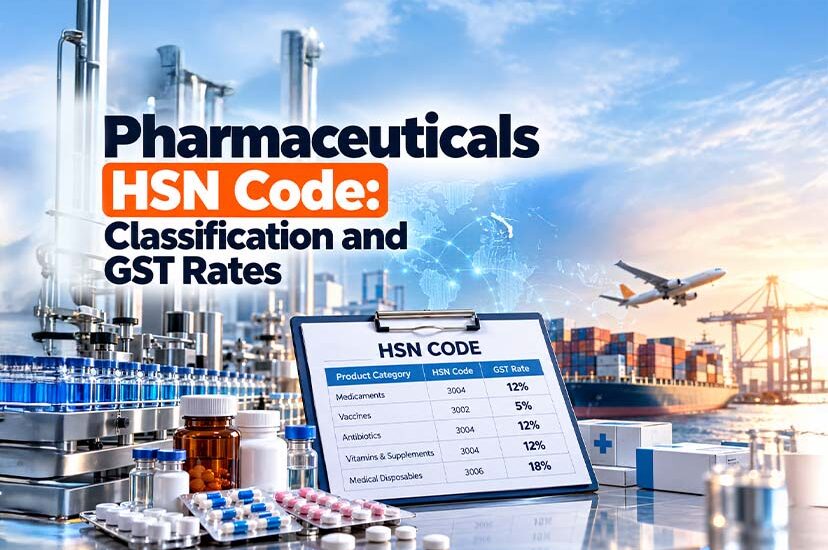
The pharmaceutical industry has a complex supply chain. Product descriptions, tax calculations and documentation must be correct for each transaction. The key issue involved in this process is the identification of the appropriate pharmaceutical HSN code. This classification is crucial for the determination of the applicable Goods and Services Tax rate on a product.
Not every medicine and pharmaceutical product is subject to the same tax rate. They are classified based on composition, intended use, dosage form and packaging. Understanding HSN Code for medicine is vital for businesses. They need to have a clear concept of the code and must ensure the correct entry in the GST return before they are able to generate an invoice. Pharmaceutical companies are at a higher risk of reporting errors if they don’t properly classify items, which can lead to tax challenges and non-compliance issues.
Defining Pharmaceutical HSN Codes
HSN code for pharmaceuticals is a classification code used for the identification of pharmaceutical products by the Harmonized System of Nomenclature. Most medicines and specified pharmaceutical goods fall under Chapter thirty. However, some related products may have a different HSN classification according to their composition and use.
Pharmaceuticals HSN Code Chapter 30 Classification
Chapter 30 includes a variety of pharmaceuticals such as medicines, vaccines, some medical dressings and special pharmaceutical preparations. The table below lists some of the main headings that you can use to help find the correct HSN code for pharmaceutical products.
| HSN heading | Product classification |
| 3001 | Glands, organ extracts, heparin and certain therapeutic substances |
| 3002 | Blood products, vaccines, antisera, immunological products, vaccines, toxins, and cultures of microorganisms. |
| 3003 | Medicaments containing mixed constituents that are not put up in measured doses or retail-sale packaging |
| 3004 | Medicaments for therapeutic or prophylactic use, put up in measured doses or in forms or packings for retail sale. |
| 3005 | Wadding, gauze, bandages and like products made or packaged for medical purposes |
| 3006 | Pharmaceutical goods, specified are certain sterile products, other; defined under heading |
The four-digit heading is only the starting point. A more specific eight-digit tariff item may be needed for exact classification. Commercial names of medicines can not be relied on to identify the correct code; businesses should refer to the full description of the product and relevant tariff notes.
HSN Codes for Common Pharmaceutical Products and GST Rates
The pharmaceutical HSN code and GST rate must be checked together. The tax treatment does not necessarily follow the heading of the product, because certain entries, exemptions or conditions may impact the tax rate.
| HSN heading | Product category | GST treatment |
| 3001 | Glands, extracts and heparin | Check the applicable tariff entry |
| 3002 | Vaccines, blood products and immunological goods | Product-specific rate applies |
| 3003 | Qualifying medicaments not in measured doses or retail packaging | Product-specific rate applies |
| 3004 | Qualifying medicaments in measured doses or retail packaging | Product-specific rate applies |
| 3005 | Medical dressings and similar products | Product-specific rate applies |
| 3006 | Specified pharmaceutical goods | Product-specific rate applies |
Note: The table lists the main classification headings and does not include a specific GST rate for each product listed under a classification. Some of the medicines listed are subject to 5% GST, and other pharmaceutical products are subject to 12% GST, nil GST or another treatment as per the relevant entry and conditions. Always verify the current rate for the exact product before invoicing.
How to Identify the Correct HSN Code for Medicines
A combination of searching a product name and selecting the appropriate HSN code is what is required to select the right HSN code for medicines. The technical specifications of the product should be analyzed, and its technical description compared with the tariff descriptions.
Key factors include–
- Composition
Identify the active ingredients and other constituents. Assess the nature of the preparation.
- Intended use
To identify if the product is used for therapeutic, prophylactic or diagnostic purposes or any other intended purpose listed in the tariff.
- Dosage form
Determine if the medicine is available in individual doses such as tablets or capsules or in another form.
- Packaging
Determine whether it is being offered in retail or bulk format.
- Tariff descriptions
Make a comparison between the product and the relevant heading, subheading and tariff item.
- GST provisions
Check the rate, exemption or specific condition.
These checks help businesses to avoid using general terms like tablets, injections or pharmaceutical preparations to choose an HSN code and GST rate.
Read: Harmonized System Code Meaning, Working, and Benefits
Common Pharmaceutical HSN Classification Errors
This can lead to discrepancies between the invoice, accounting records and the GST returns in case the wrong pharmaceutical HSN code is selected. There are a few pitfalls to watch out for.
- Using a generic code: If a particular code is assigned to all medicines, then there is potential for misclassification.
- Incorrect application of the GST rate: A rate applicable to one specified medicine may not apply to another product under the same broad chapter.
- Not considering packaging differences: How a medicine is packaged will impact whether it falls under heading 3003 or 3004.
- Outdated information: Changes to GST notifications and tariff entries can make older classification references unreliable.
- Mismatching invoice details: The product description, HSN code, and tax rate should accurately correspond to the goods supplied.
Managing Pharmaceutical Working Capital With Credlix
For pharmaceutical companies, the requirement for accurate tax records is not the only concern when it comes to tax compliance. Manufacturers and distributors also need funds to restock supplies, pay suppliers and cover the difference between the supply of goods and the customer’s receipt of payment.
Credlix can provide financing solutions including sales bill discounting, which allows businesses to avail working capital based on qualified domestic sales bills, subject to the eligibility criteria and financing conditions applicable thereto. Invoice funding helps meet cash flow needs when a pharmaceutical company has a longer payment period from its buyers. Before choosing a working-capital solution, businesses should consider the amount of funding and repayment commitments and eligibility criteria.
Keeping Pharmaceutical GST Classification Accurate
The assessment and verification of the appropriate GST entry is key to the correct selection of the pharmaceutical HSN code. Companies should check the tariff descriptions and the composition of the product. Businesses should also assess its dosage form and existing tax provisions before issuing their invoices.
Maintaining product records and checking for any possible changes is essential. This helps in product classification. Pharmaceutical manufacturers and sellers can enhance their GST compliance and minimize reporting mistakes. This will also ensure that they are able to handle the tax documentation in a more consistent manner.
FAQs
What is the HSN code for pharmaceutical products?
The HSN code for pharmaceutical products depends on the product’s classification. There is no single HSN code for all pharmaceutical products. Chapter 30 contains headings for some therapeutic products, which are 3001. 3002 is for vaccines and immunological products. 3003 and 3004 for various kinds of medicaments and 3005 and 3006 for specific medical and pharmaceutical products.
What is the GST rate on medicines in India?
The GST rate on medicines varies by product and applicable tax entry. Some specific drugs are subject to 5% GST, while others are subject to other rates or exempted from paying GST. A business must check the rate to see what Tariff Item and GST notification it applies to before applying a rate to an invoice.
Is HSN code 3004 applicable to all medicines?
No. HSN code 3004 generally covers qualifying medicaments put up in measured doses or in forms or packaging for retail sale. Some pharmaceutical products might be classified under various headings due to their composition. Always consult the relevant description of the tariff before confirming the tariff code and the tax rate that applies
