
- May 26, 2026
- Posted by: Rishabh Agrawal
- Categories: Export, Blog
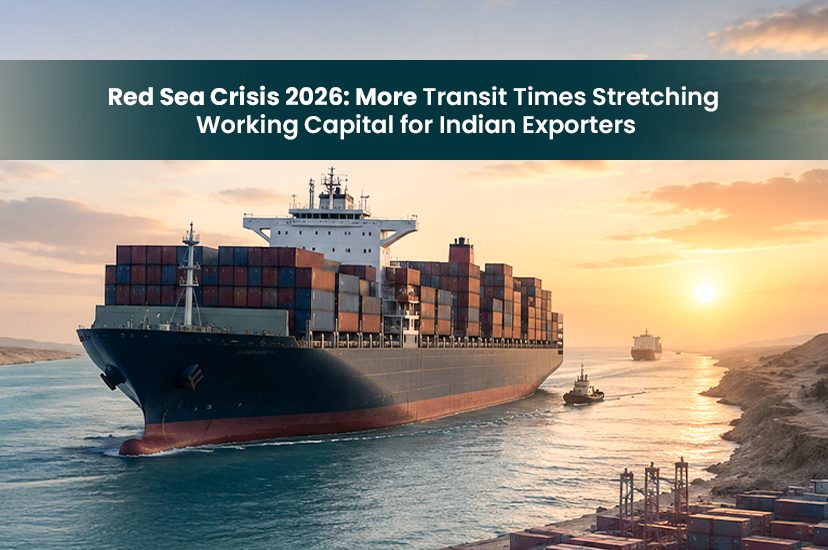
The ongoing Red Sea crisis continues to disrupt global shipping routes in 2026. It is creating new operational and financial challenges for exporters. It also directly impacts shipment planning, delivery commitments and working capital cycles for Indian exporters who are highly dependent on the European and the West trade corridors.
Numerous shipping lines have diverted shipping around the Cape of Good Hope rather than through the Red Sea and through the Suez Canal. This will reduce the geopolitical risk zones but will also extend voyages, freight rates and uncertainty of cargo traffic.
For exporters with short turnaround times, these are no longer just logistical problems, but working capital management challenges.
Why the Red Sea Route Matters for Indian Exporters
It is one of the most significant international trade routes and is still vital to international shipping, which links Asia to Europe via the Suez Canal.
A significant portion of India’s exports to:
- Europe
- North Africa
- Mediterranean markets
- Parts of North America
This route was previously commonly used due to the reduction in shipping time and logistics. Ongoing geopolitical tensions and security disruptions have forced several global carriers to avoid the region. It has increased their dependence on longer alternative routes.
This change has directly affected numerous Indian companies:
- Shipment timelines
- Freight pricing
- Delivery predictability
- Export Cash flow cycles
How Extended Transit Times Are Affecting Export Working Capital
Due to longer shipping times, a chain reaction is created in the cash flow systems of exporters.
- Payments Are Getting Delayed
The majority of export payment cycles only start when goods are received at the port of destination or when key delivery events are met. The longer the transit, the longer the receivables realization and the slower liquidity rotation.
- Inventory Remains Locked for Longer Periods
The longer goods sit in transit with exporters, the more stress it puts on operational cash flow and inventory planning.
- Freight Costs Are Increasing
Exporters in various industries have seen their shipping expenses, fuel surcharges, insurance costs and logistics uncertainty rise, with longer rerouted voyages.
- Production Cycles Are Getting Disrupted
Late receivables can diminish working capital to purchase raw materials and manufacturing, affecting future shipment readiness.
- Buyer Negotiation Pressure Is Rising
Some overseas customers are requesting payment changes, delivery flexibility, or price discounts as a result of shipping issues.
This combination is significantly stretching export working capital cycles for Indian businesses.
Industries Facing the Strongest Impact
Certain export sectors are experiencing greater pressure because of shipment sensitivity, delivery dependency, or faster inventory turnover models.
| Sector | Key Impact Area |
| Textiles and Apparel | Seasonal delivery pressure |
| Engineering Goods | Delayed project timelines |
| Pharmaceutical Exports | Supply continuity concerns |
| Consumer Goods | Inventory replenishment delays |
| Perishable Product Exports | Higher logistics risk |
Businesses operating in time-sensitive export categories are facing the highest operational stress from extended shipping timelines.
Why Working Capital Pressure Is Becoming a Bigger Risk Than Freight Costs
While rising freight rates are a major concern, many exporters are now realizing that delayed liquidity cycles create even greater long-term operational pressure.
Extended shipment timelines affect:
- Receivable cycles
- Inventory turnover
- Supplier payments
- Production continuity
- Payroll management
- Procurement planning
For MSMEs, even a few weeks of delayed receivable realization can significantly impact day-to-day operations.
Businesses dependent on continuous export rotations may struggle to maintain shipment consistency if cash flow gaps widen further.
This is why the current crisis is increasingly being viewed as both a logistics disruption and a trade finance challenge.
How Exporters Are Adjusting to Longer Shipping Cycles
Indian exporters are gradually changing operational strategies to manage prolonged transit uncertainty more effectively.
- Inventory Planning Is Becoming More Aggressive
To avoid shipment disruptions, many businesses are putting in place expansion of production planning buffers and inventories.
- Export Credit Demand Is Rising
To deal with the delayed payment cycle, businesses are to trade funding and export liquidity assistance.
- Buyer Communication Is Becoming More Structured
Delivery expectations and schedule timelines with foreign buyers are being renegotiated proactively by the exporters.
- Alternative Logistics Strategies Are Being Explored
Alternate ports, regional warehousing and multimodal shipping are among some of the things that exporters are considering to minimize transit dependency.
Such changes are a sign of the depth of the Red Sea disruptions to export activities.
How Export Factoring Can Help During Extended Transit Delays
The longer the shipment cycles, the more exporters are looking for financing options that can enhance liquidity without waiting for overseas payment realization.
The advantage of export factoring for businesses:
- Unlock working capital using export invoices.
- Ease up cash flow pressure
- Maintain production continuity
- Manage supplier obligations
- Support ongoing shipment cycles
Exporters can obtain ready cash related to receivables, rather than waiting for delayed payments from buyers.
This is particularly relevant for MSMEs who are dealing with:
- Continuous export orders
- Shorter inventory cycles
- Strong operating reliance on receivable realization
In volatile trade situations, quick liquidity can prove to be an operational benefit.
Could the Red Sea Crisis Reshape Global Supply Chains?
The continued disruption of traditional shipping corridors may start to have a cumulative impact on the way exporters structure future global trade operations.
Many businesses are reassessing:
- Inventory positioning
- Regional warehousing
- Supplier diversification
- Logistics partnerships
- Shipment risk exposure
How geopolitical tensions can rapidly impact logistics and international trade’s financial health has been brought into sharp focus.
Businesses that are already better prepared with liquidity management and financing flexibility will be better equipped to deal with future uncertainties in global supply chains.
Building More Resilient Export Finance Strategies in a Volatile Trade Environment
One of the key realities of the current Red Sea shipping disruption is that when payment cycles lengthen, unexpected logistical issues can easily turn into a working capital crisis for global exporters.
Liquidity planning and more resilient trade finance strategies will become more important for exporters as international trade routes continue to be exposed to geopolitical and operational risks.
Businesses that adopt a flexible approach to their operations will be able to manage their working capital smartly and will be better prepared to deal with trade disruptions in the future.
Strengthen Export Liquidity with Credlix Trade Finance Solutions
Countries around the world are suffering from shipping disruption, which is extending export payment timelines, and businesses require more financing solutions that can extend the credit period.
Exporters can access export factoring, invoice financing and collateral-free trade finance solutions with Credlix to release working capital to suit contemporary cross-border trade cycles. The close association between the availability of liquidity and export receivables allows companies to better control shipment delays, supplier commitments, and continuity in business activities.
This will enable exporters to lower cash flow stress while ensuring better financial stability in a world of trade uncertainty.
FAQs–
- Why is the Red Sea crisis affecting Indian exporters?
With the Red Sea shipping route coming to an end, numerous vessels have been rerouting to longer routes, causing delays in shipping transit times, freight rates, and export payments.
- What effect do longer transit times have on the export working capital?
What accounts for longer shipment cycles are the delays it creates to the realisation of receivables, the extended period of time in which inventory resides in transit and the cash flow stress it generates for the exporters.
- What role can export factoring play in the event of a disruption in shipping?
In case of delays, export factoring solutions allow exporters to obtain liquidity earlier for their export invoices without payment, thereby alleviating cash flow tension throughout the export procedures
