
- June 26, 2026
- Posted by: Rishabh Agrawal
- Categories: Invoice discounting, Blog
Delayed payments remain a major cash flow issue for businesses, especially MSMEs that supply goods and services to large corporate buyers. Payments can take weeks or months to arrive, even as sales increase. It can strain cash flow. This leads many enterprises to seek financing options that can free up cash tied up in unpaid invoices before their due dates.
This is where the TReDS platform has become an important part of the financing ecosystem. TReDs allows companies to access bill discounting services while also allowing the financier to benefit from an open, structured financing process. With the growing demand for invoice financing for MSMEs, the platform is also gaining significance as an effective solution for businesses seeking efficient working capital funding and receivables management.
What Is TReDS?
The Trade Receivables Discounting System (TReDS) is a digital platform that enables financing of trade receivables under the RBI’s regulatory framework. MSMEs and other suppliers can utilize the TReDS platform to link with banks and financial institutions willing to finance their receivables for early payment after their invoices are approved.
Why Was TReDS Introduced?
Delayed payments by buyers have long been a challenge for Indian companies. Smaller businesses are at a greater risk of facing liquidity issues since they receive payment much after the delivery of goods or services. This makes it challenging to oversee the procurement, payroll, inventory and other operational costs. With delayed payments to MSMEs, there was a growing need to find alternate funding for businesses, leading to an increased importance of more efficient MSME receivables financing.
The purpose of introducing TReDS was to enhance the transparency, efficiency, and financial accessibility of the receivables market. The platform helps businesses access working capital financing more efficiently by creating a digital marketplace where approved invoices can be financed competitively. Digital invoice discounting has also reduced paperwork and made financing procedures easier and more convenient.
How Bill Discounting Works On TReDS?
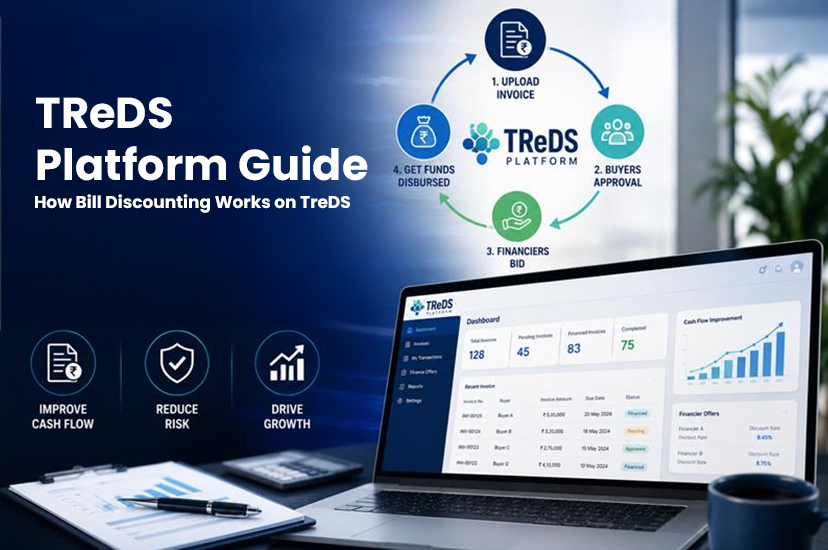
The TReDS financing process has a well-defined digital workflow that connects suppliers, buyers, and the financier on a common platform.
- Invoice Upload
The process begins when a supplier uploads invoice details onto the invoice discounting platform after goods or services have been delivered. The invoice represents a receivable that can potentially be financed before the payment due date.
- Buyer Acceptance
Once uploaded, the buyer checks and accepts the invoice. Buyer acceptance is important because it means that the transaction has been verified as legitimate and forms the basis for approved invoices financing in the TReDS system.
- Competitive Bidding By Financiers
After buyer approval, participating financiers such as banks and NBFCs can bid to finance the receivable. This competitive bidding process helps determine financing rates while promoting transparency in receivables discounting transactions.
- Early Payment To Supplier
After the financing offer has been accepted, the financing amount is disbursed to the supplier prior to the due date of the invoice. Businesses can use bill discounting to convert outstanding bills into cash and enhance cash flow in their operations.
- Payment Collection On Due Date
On the agreed payment date, the buyer settles the invoice amount with the financier rather than the supplier. This structure enables efficient trade receivables financing while reducing collection-related uncertainty for suppliers.
Who Can Use the TReDS Platform
TReDS participation extends across multiple stakeholders involved in business-to-business transactions.
- MSMEs And Suppliers
The platform is widely associated with MSME financing solutions, allowing eligible suppliers to access financing against approved receivables. Businesses that regularly sell to larger organizations often use TReDS to improve working-capital availability.
- Corporate Buyers
Large organizations participate as buyers within the ecosystem and play an important role in enabling buyer-led financing. Their invoice acceptance provides the confidence required for financiers to evaluate and fund receivables.
- Banks And NBFCs
Financial institutions act as invoice financing providers by participating in the bidding process and offering funding against approved invoices. Their involvement helps create a competitive financing environment within the platform.
Key Benefits Of Bill Discounting Through TReDS
Several operational and financial advantages are contributing to wider adoption across industries.
- Faster Access To Funds
The greatest benefit of TReDS is getting quick working capital without having to endure long buyer payment terms. This enables businesses to maintain liquidity and ensure smooth operations.
- Competitive Financing Rates
Since multiple financiers may compete to fund approved receivables, businesses can often benefit from low-cost invoice financing compared with certain traditional financing options.
- Digital Processing
The platform enables digital trade finance through electronic workflows, facilitates paperless processes, enhances efficiency and speeds up financing throughout the entire receivables cycle.
- Improved Cash Flow Visibility
Better receivables management enables businesses to plan procurement and operational expenses with greater confidence and predictability.
What Businesses Should Evaluate Before Using TReDS
Prior to entering into TReDs, businesses need to consider a number of factors to make sure that TReDs meet their funding needs.
- Buyer Participation
The availability of financing depends on whether customers are TReDS-registered buyers. Businesses should assess the participation of their existing buyer network before relying heavily on the platform.
- Invoice Quality
Finance opportunities are generally associated with approved receivables. Documentation, invoice accuracy and buyer acceptance are all critical factors in the finance process.
- Financing Costs
Companies should be aware of the invoice discounting charges, financing rates and other related costs that may apply, so they can determine the value of financing they receive from the platform.
- Funding Requirements
Each business has varying financing requirements. The use of effective working capital planning facilitates the understanding of the position of TReDS financing as part of the overall liquidity and operations planning.
- Platform Processes
Understanding the overall TReDS process, including onboarding requirements, invoice submission procedures, and financing workflows, can help businesses use the platform more efficiently.
TReDS Vs Traditional Bill Discounting
Both TReDS financing and traditional bill discounting help businesses access funds against receivables before payment due dates. However, the mechanisms through which financing is obtained can differ significantly. Traditional financing typically requires interaction with a single financial institution and may involve further documentation, negotiation, and delays.
In contrast, the invoice discounting platform model used by TReDS creates a digital marketplace where several financiers can compete to finance the approved invoice. This can lead to transparency, efficiency, and ease of access to trade receivables financing. The digital structure also contributes to a more uniform financing experience for those participating in the businesses.
Building a Smarter Approach to Receivables Financing
The TReDS platform is an essential step toward improving access to receivables financing that businesses are looking for to optimize cash flow. The platform facilitates the establishment of a clearer market for supply, purchase and finance, thereby helping solve one of the most persistent problems of the growing businesses – delayed payment.
Bill discounting will likely continue to play a crucial role in enhancing liquidity and minimizing dependence on traditional borrowing, as businesses seek cost-effective financing solutions. By leveraging TReDS or any other working capital financing, businesses can enhance their operational agility and contribute to sustainable growth.
Credlix and the Evolution of Digital Receivables Financing
As businesses increasingly seek faster and more flexible access to liquidity, digital financing ecosystems continue to evolve beyond traditional funding models. Credlix provides technology-driven invoice financing and modern trade finance solutions that help businesses free up funds locked up in outstanding invoices and enhance their working capital management. Credlix can help businesses access their funds more quickly to improve cash flow, sustain business operations and meet the evolving financial requirements of a changing business landscape.
FAQs
What is the TReDS platform?
TReDS (Trade Receivables Discounting System) is an online platform governed by the RBI under the Payment and Settlement Systems Act, 2007. It enables MSME suppliers to auction approved invoices to the banks and NBFCs for early payment. Multiple RBI-authorized platforms currently operate in India, giving suppliers a choice of where to register and transact.
How does bill discounting work on TReDS?
An invoice is uploaded by the supplier post delivery, and it is verified and approved by the buyer on the platform. Registered financiers then bid competitively to purchase the receivable at a discount. Upon acceptance of a bid, the money is paid to the supplier early, with the buyer paying the financier directly on the promised date.
Who can avail TReDS?
Any Udyam registered MSME providing goods and services to any corporate buyer, PSU, or Government entity without a minimum turnover. Corporate buyers are also required to register with a TReDS platform, specifically for all Central Public Sector Enterprises and companies with a turnover of more than ₹250 crore. Banks and NBFCs join as financiers
