
- September 21, 2026
- Posted by: admin
- Categories: Business Fundamentals, Blog
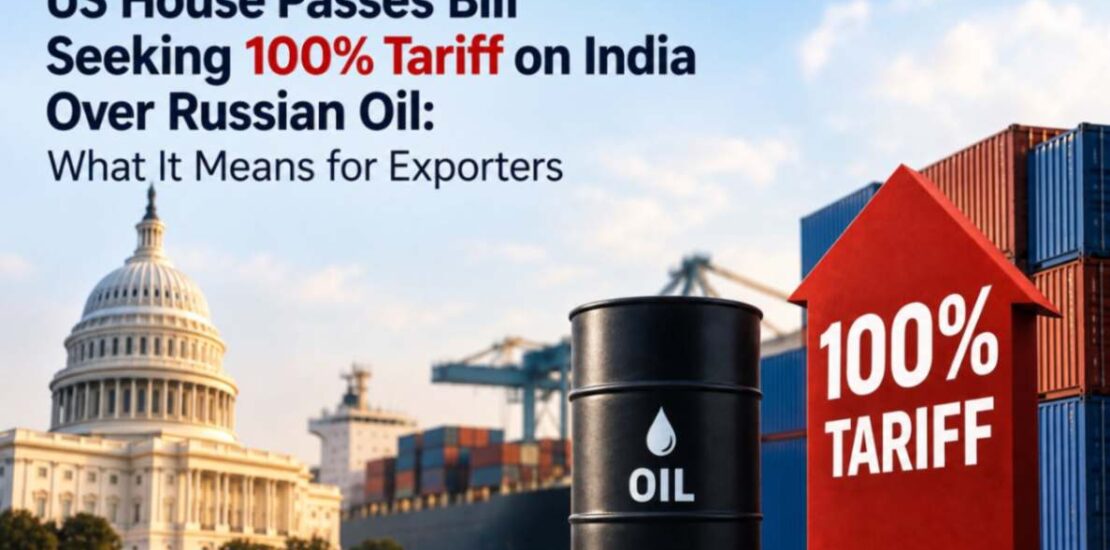
On Wednesday, September 16, The US House of Representatives passed the Lindsey O. Graham Sanctioning Russia and Iran Act of 2026 by a vote of 262-159. The Senate had already passed the bill in August, and it is now also backed by President Trump. The Bill authorizes tariffs of up to 100% on countries that are the largest buyers of Russian oil and gas, like India and China.
This isn’t the first time India is facing tariffs due to energy trades with Russia. The US had earlier imposed a 50% tariff on Indian goods in August 2025, levied for over a year. A 25% base rate plus a 25% penalty linked to Russian oil trades. What’s new here is a law imposing a larger tariff on top of the existing rate.
Now, the real concern is: what does it mean for exports? Politics is affecting business too much, and here is what to watch for.
What the Tariff Bill Means for Exporters’ Cash Flow?
Even before the law gets enforced, the news will affect how US buyers will behave:
Buyers slow down or renegotiate. Import contracts get paused or repriced while buyers wait to see how this plays out.
Payment terms stretch further: Buyers that are already leveraging the effects of 50% tariffs may push for longer credit periods. This will allow them to hedge the risk, and the Indian exporters will have to consider waiting longer to get their invoices cleared.
Working capital stays locked up: Exporters are expected to face inventory hold-ups in the warehouses, due to which the working capital gets locked. The cash conversion cycle will take longer when maintaining liquidity is already a challenge to diversify the buyers.
Why Waiting Period for Exporters is the Real Risk?
As there is no telling what the final tariff rate will be yet, or which goods may be exempted. The decision can take weeks or even several months and the exporters will be hurt the most. Next? The buyers get curious and orders slow down along with pending payments taking longer to clear.
This is where depending only on banks for working capital becomes a problem. A 60- or 90-day wait for LC negotiation or bill discounting through a traditional bank eats up the very time exporters need to find new buyers or absorb the cost hit.
Also read: US India Tariffs 2026: Strategies to Protect Your Import Margins
What Should Exporters Do Now?
| What exporters should do now | Action |
| Check tariff exposure | Identify products and buyers that could be affected by a new tariff and explore other markets such as the EU, Middle East, and ASEAN. |
| Free up cash from invoices | Use invoice discounting or factoring to get money from unpaid invoices without waiting for buyers to pay. |
| Build a cash reserve | Arrange working capital early to handle higher costs and possible cash flow pressure. |
| Stay in touch with buyers | Discuss flexible payment terms, shipping dates, and cost-sharing options to keep orders moving. |
Final Thoughts
Both the Senate and the House have now passed this bill, and it’s headed to Trump next. It adds a new tariff threat on top of more than a year of pressure Indian exporters have already faced over Russian oil. Exporters can’t afford to wait for a final tariff number before acting. The ones who come out ahead will be the ones who use this time to build up cash reserves and line up new buyers now, so that when a tariff is confirmed, it doesn’t turn into a cash crunch.