
- June 1, 2026
- Posted by: Rishabh Agrawal
- Categories: Export Financing, Blog
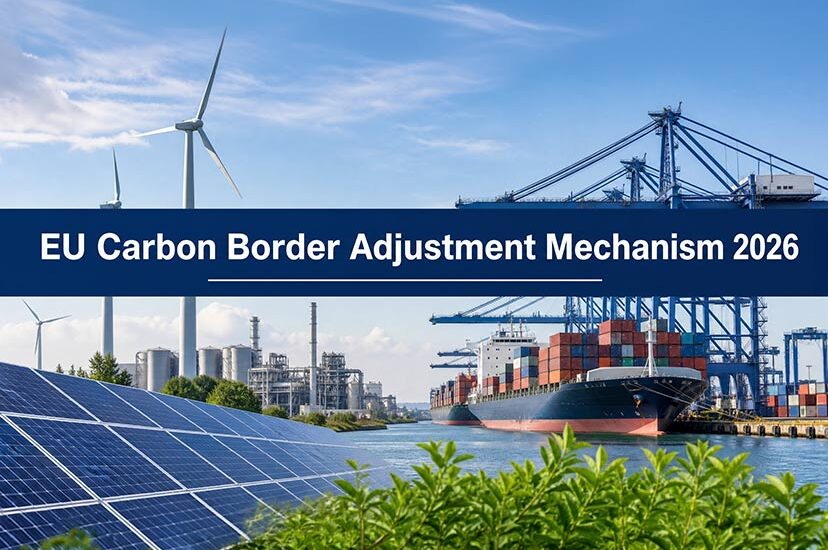
The Carbon Border Adjustment Mechanism of the European Union is emerging as one of the most significant regulatory initiatives impacting world trade in 2026. The new regime may have a significant impact on Indian export costs, pricing competitiveness, compliance, and market access for those exporting carbon-intensive products to Europe.
Unlike traditional tariffs, CBAM is designed to impose a carbon-linked cost on imported goods entering the European Union. The mechanism is designed to stop the movement of carbon leakage, which refers to the transfer of production to countries with less stringent climate policies, while the European industries still have to abide by the strict climate policy.
It is no longer just an environmental policy question for Indian businesses. CBAM is fast emerging as a big trade competitiveness, compliance, and working capital management challenge for exporters. Majorly for industries related to manufacturing emissions and industrial production.
What is the European Union Carbon Border Adjustment Mechanism (CBAM)?
The carbon pricing system of the European Union for imports is referred to as the Carbon Border Adjustment Mechanism. It requires importers to report on the embedded carbon emissions of imported products into the European Union and eventually to buy CBAM certificates to match those emissions.
The mechanism is being implemented gradually:
- The transitional reporting phase began in October 2023
- Financial obligations are expected to become fully operational from 2026 onward
CBAM currently applies primarily to carbon-intensive sectors such as:
- Iron and steel
- Aluminum
- Cement
- Fertilizers
- Electricity
- Hydrogen
Many analysts believe the framework may be extended to other areas over the years.
Why CBAM Matters for Indian Exporters?
Europe remains one of India’s largest export destinations for industrial goods and manufactured products. The introduction of carbon-linked import costs could therefore significantly influence export economics for businesses supplying EU markets.
CBAM creates pressure in several areas:
- Carbon emissions reporting
- Export pricing
- Operational compliance
- Production transparency
- Sustainability tracking
- International buyer expectations
Even moderate additional compliance or carbon costs may affect long-term competitiveness for exporters operating with thin margins.
Global buyers are increasingly integrating the following into procurement decisions:
- Sustainability requirements
- ESG standards
- Carbon disclosure expectations
- Supply chain transparency
Indian Sectors Likely to Face the Highest CBAM Impact
Iron and Steel Exporters
What Makes the Sector Vulnerable?
The steel industry is one of the most vulnerable industries due to the direct impact of CBAM on carbon-intensive industrial production. Indian steel exporters supplying to Europe could face expensive compliance and carbon reporting.
Potential Business Impact
- Greater compliance costs on exports.
- Emission tracking requirements
- Pricing competitiveness pressure
- Increased buyer scrutiny
Companies that can demonstrate cleaner production systems and robust sustainability reporting could have strong future benefits.
Aluminum Manufacturers
Why the Sector Is Vulnerable?
High energy consumption in aluminum production involves making embedded emissions an important factor under CBAM calculations.
Potential Business Impact
- Higher reporting complexity
- Energy sourcing pressure
- Carbon accounting obligations
- Increased operational audits
Renewable energy or reduction in emissions for export industries may lead to competitiveness.
Chemical and Fertilizer Exporters
Risk Factors Impacting the Industry
There are also several chemicals and fertilizer products whose production processes have higher emissions, which could be subjected to a more critical analysis in the context of CBAM.
Potential Business Impact
- Rising compliance costs
- Sustainability certification pressure
- Export pricing recalibration
- Operational transparency demands
Businesses with stronger environmental compliance systems may face lower adjustment pressure.
Engineering and Industrial Manufacturers
Major Risks Facing the Sector
Even where products are not directly covered initially, industrial buyers across Europe are increasingly evaluating supply chain emissions and sustainability metrics.
Potential Business Impact
- Supplier sustainability audits
- Carbon disclosure requests
- Procurement standard changes
- Increased reporting expectations
This could gradually affect broader manufacturing supply chains connected to EU buyers.
How CBAM Could Affect Export Profitability?
The biggest concern for many exporters is not only the direct carbon cost but the cumulative operational impact of compliance.
CBAM may increase:
- Documentation requirements
- Sustainability reporting expenses
- Emission verification costs
- Production adjustment investments
- Export compliance overhead
For exporters already operating under:
- Freight volatility
- Global demand pressure
- Tighter margins
- Delayed payment cycles
Additional compliance costs can directly affect profitability.
This is why CBAM is increasingly being viewed as both an environmental framework and a major trade finance challenge.
Why Carbon Compliance Is Becoming a Competitive Advantage?
The typical global buyer is no longer just considering the price and production capacity of a supplier.
Procurement decisions are increasingly based on:
- Carbon transparency
- ESG performance
- Sustainability compliance
- Renewable energy adoption
- Emissions reporting capability
Exporters who can provide evidence of reduced carbon intensity and robust sustainability systems can gain:
- Stronger buyer confidence
- Longer-term contracts
- Premium positioning
- Reduced compliance friction
This shift may help to gradually change the competitive landscape in global manufacturing supply chains.
How Indian Exporters Are Preparing for CBAM?
The level of risk of disruption to businesses that export to Europe is growing, and businesses are taking proactive steps to minimize such risk in the future.
Strengthening Emissions Reporting
Exporters are developing internal sustainability reporting processes and carbon accounting systems.
Investing in Cleaner Manufacturing
Some companies are exploring the following measures to limit carbon exposure over the long term:
- Renewable energy integration
- Energy-efficient equipment
- Lower-emission production methods
Enhancing Supply Chain Transparency
Documentation systems are being reinforced to enhance compliance readiness and reporting capability of exporters.
Reassessing Export Pricing Models
Companies are gradually evaluating the potential impact of carbon costs on the competitiveness of their European markets.
The changes are made because of the increasing relevance of sustainability-linked trade compliance.
Why MSME Exporters Could Face Greater Pressure?
Large corporations often have stronger resources for:
- Sustainability reporting
- ESG compliance
- Mission tracking
- Operational audits
MSMEs, however, may struggle with:
- compliance costs
- reporting complexity
- technical expertise gaps
- financing constraints
This creates a risk where smaller exporters become less competitive in highly regulated export markets unless financing access and compliance support improve.
For many MSMEs, the challenge is not only environmental adaptation but maintaining sufficient working capital flexibility while handling additional compliance investments.
How Working Capital Pressure Could Increase Under CBAM?
CBAM-related adjustments may stretch exporter liquidity cycles because businesses may need to invest in:
- Sustainability upgrades
- Compliance systems
- Emission monitoring
- Operational audits
- Documentation infrastructure
At the same time, international buyers may increase scrutiny before approving orders or supplier renewals.
This can create:
- Delayed onboarding cycles
- Longer procurement approvals
- Slower receivable realization
- Additional operational expenses
For exporters already managing volatile global trade conditions, this could significantly increase working capital pressure.
How Export Factoring Can Support Exporters During Compliance Transitions?
It is more important than ever to keep exporters liquid with growing compliance and operational expenses.
Export factoring can help businesses:
- Unlock working capital against export invoices
- Improve receivable cycles
- Manage operational cash flow
- Maintain production continuity
- Support compliance-related investments
Instead of waiting through extended international payment timelines, exporters can access faster liquidity linked directly to receivables.
This becomes especially important during periods of:
- Regulatory transition
- Pricing pressure
- Operational restructuring
- Sustainability investment cycles
Trade finance solutions may thus become more flexible as exporters adjust to changing world compliance rules.
Could CBAM Reshape Global Manufacturing Supply Chains?
The EU’s carbon adjustment mechanism could have a broader effect on imports than just for the EU.
CBAM could accelerate:
- Cleaner manufacturing adoption
- Sustainability-linked procurement
- Carbon transparency standards
- Green supply chain development
- Global emissions accountability
Exporters that are more prepared may benefit in the long term as environmental compliance is increasingly built into the competitiveness of global trade.
Businesses unable to adapt may face:
- Buyer migration
- Reduced pricing flexibility
- Compliance-related export barriers
- Restricted access to premium markets
This is why CBAM is being viewed globally as a structural shift in international trade policy.
How CBAM Could Redefine Export Competitiveness in the Coming Years
The EU Carbon Border Adjustment Mechanism represents a significant change in how the competitiveness of global trade could be assessed in the future. While cost and manufacturing scale will continue to be important factors, sustainability performance, carbon transparency, and compliance readiness have become equally critical.
Being able to combine operational efficiency and liquidity management could be an important factor for Indian exporters to determine durable success in global markets. Businesses that begin adapting early may gain stronger positioning as international trade increasingly relies on sustainability and compliance.
Strengthen Export Liquidity with Credlix Trade Finance Solutions
There has been a growing need among exporters for financing solutions that can help them adapt to longer cycles of global trade and increasing business costs with compliance-driven standards.
Credlix offers export factoring, invoice financing, and collateral-free trade finance solutions for modern cross-border trade operations to unlock working capital for exporters. Having access to liquidity directly tied to export receivables allows companies to better control their operational costs and changing compliance needs.
This will ensure that exporters remain more stable in their cash flow and can adjust to evolving international trade regimes like CBAM.
FAQs
What is the EU Carbon Border Adjustment Mechanism?
The Carbon Border Adjustment Mechanism is a European Union framework that introduces carbon costs and reporting obligations for imports entering the European Union markets.
Which Indian export sectors are most affected by CBAM?
The highest impact of CBAM will be for sectors with the most carbon-intensive manufacturing activities. The list includes iron and steel, aluminum, fertilizers, chemicals, and other carbon-intensive manufacturing.
What are the steps Indian exporters need to take to comply with CBAM?
Exporters can build resilience in emissions reporting and enhance sustainability reporting documentation. They can also invest in cleaner production systems and enhance working capital management to meet the changing compliance requirements.
